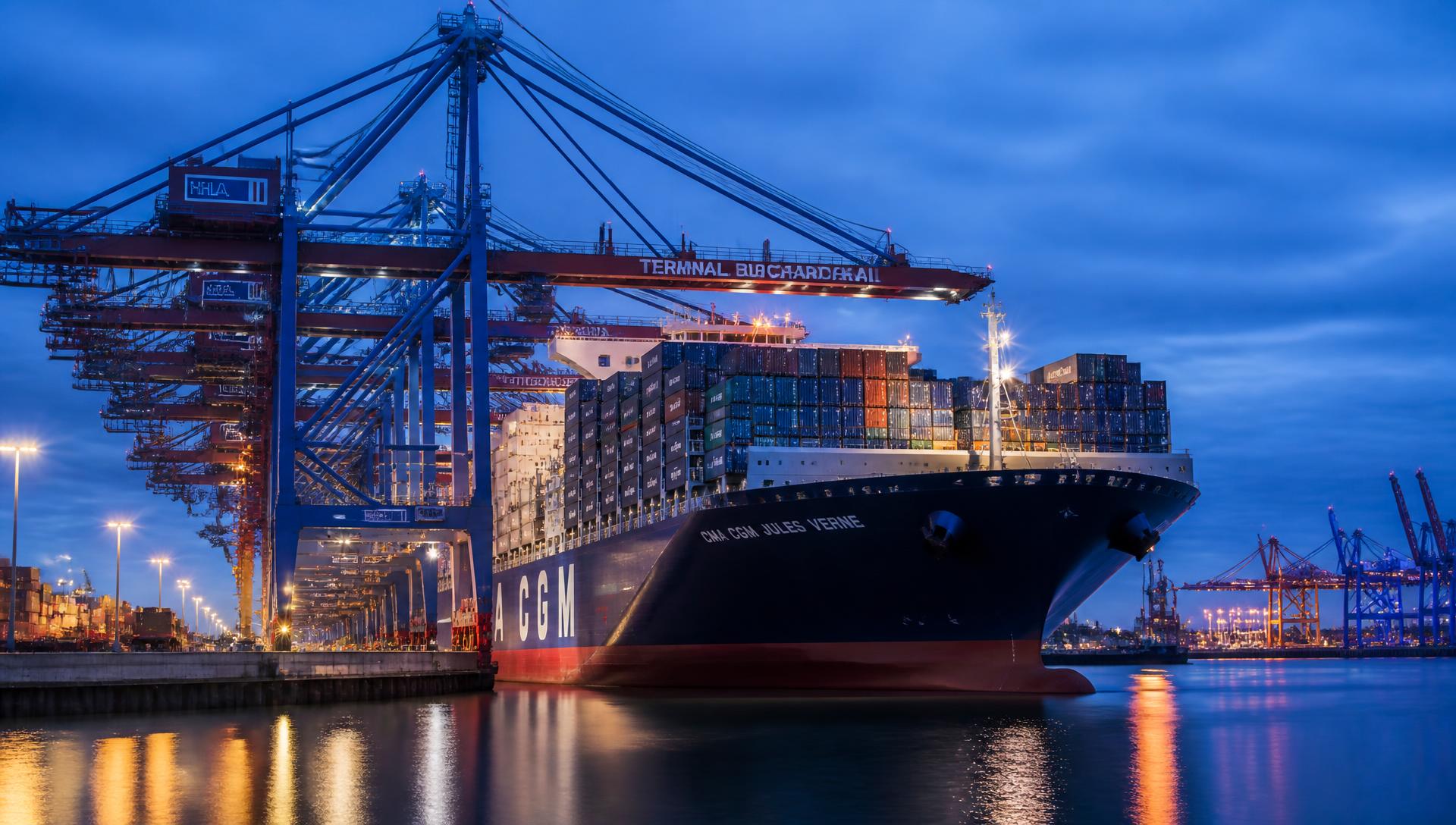

The port of Lomé plays a distinctive role on the West African maritime map. Unlike several neighbouring ports that face draft or congestion limitations, Lomé has a deep-water quay able to receive very large container vessels. Over the years, this capacity has turned it into a key transshipment point for the wider sub-region, from Benin to Niger and beyond to landlocked countries such as Burkina Faso.
For shippers based in Montreal, Laval, Quebec City or Ottawa-Gatineau sending goods toward Togo or hinterland countries, understanding Lomé's hub function makes it easier to anticipate how the shipment will actually move, rather than simply booking a container without visibility into its real routing.
In this article, we explain what a transshipment port is, why Lomé became a hub for West Africa, and what this concretely means for a consolidated shipment leaving Canada.
What is a transshipment port
A transshipment port is a location where containers are moved from one vessel to another before reaching their final destination. Instead of calling directly at every small regional port, major carriers concentrate their largest ships on a handful of strategic hubs, then redistribute cargo to smaller ports using lower-capacity feeder vessels.
Why this model exists
- Very large vessels cannot call everywhere due to draft restrictions.
- Concentrating calls at a hub reduces operating costs for carriers.
- It allows efficient service to countries without a deep-water port of their own.
Lomé's geographic position
Togo sits at the centre of the Gulf of Guinea, between Ghana and Benin. This position, combined with modern port infrastructure, makes it a natural logistics crossroads for several coastal and landlocked countries.
Why Lomé became a regional hub
A deep-water port
The Autonomous Port of Lomé is one of the few West African ports able to receive large-capacity container vessels without major tide-related restrictions. This technical feature is central: it allows carriers to position mother vessels there, then redistribute cargo to neighbouring ports.
An efficient container terminal
The development of a modern container terminal at Lomé has significantly increased handling capacity and reduced vessel turnaround time. For shippers, this can translate into smoother flow through the logistics chain, though actual transit times still vary depending on the period and current congestion.
A gateway to the hinterland
Togo shares land borders with Ghana, Benin and Burkina Faso, and lies close to Niger and Mali. The road corridor departing from Lomé allows cargo to reach these landlocked countries that have no direct sea access.
What the hub role means for a Canadian shipper
A multi-step routing
A shipment from Montreal to Lomé does not necessarily follow a single direct leg. Depending on the carrier selected, the container may transit through one or more intermediate ports in Europe or elsewhere before being transshipped onto a vessel serving Lomé. It is important to keep this in mind rather than expecting a simple linear route.
Potential onward connections into the hinterland
For clients whose cargo needs to continue toward Ouagadougou, Niamey or other inland cities, Lomé acts as the switch point between the ocean leg and road transport. We recommend discussing the onward routing with your forwarder before booking, so expectations are clear from the start.
Extra attention to documentation
Because cargo transits through an active hub, documentation accuracy becomes even more important: bill of lading, manifest, commercial invoice and packing list must all be consistent to avoid delays on arrival or during transshipment.
Consolidation to Lomé: what to know
How consolidation works
Consolidation means sharing a container with other shippers to reduce costs for volumes that do not justify a full container. It suits individuals and small businesses sending parcels, furniture, appliances or small commercial quantities of goods.
Advantages for shipments to Togo and the hinterland
- Cost shared among several shippers.
- Generally more frequent departures than waiting to fill a full container.
- Flexibility for varied volumes, from a small parcel to several cubic metres.
Comparison table: consolidation vs full container
| Criterion | Consolidation (LCL) | Full container (FCL) |
|---|---|---|
| Typical volume | A few boxes up to several m³ | Full 20 or 40 foot container |
| Cost for small volume | More advantageous | Less advantageous |
| Exclusive control of container | No | Yes |
| Best suited for | Individuals, SMEs | High-volume businesses |
| Departure flexibility | Depends on grouping | Depends on booking |
Documents and preparation for a shipment via Lomé
Essential documents
- Detailed commercial invoice.
- Packing list.
- Bill of lading.
- Identification and recipient details in Togo or the final destination country.
Packaging suited to transit
Since cargo transits through an active port where it may be handled multiple times, sturdy packaging is recommended, particularly for fragile items or appliances.
If you are preparing a shipment to Togo or to a hinterland country served through Lomé, feel free to send us a WhatsApp message to discuss your volume and timeline before booking.
The forwarder's role in this type of shipment
Coordinating ocean and road segments
When cargo needs to continue overland after Lomé, coordination between the ocean leg and the road segment becomes a key factor. An experienced forwarder can help organize this transition and anticipate the documents needed for border crossings.
Tracking and communication
Good tracking throughout the journey, including during transshipment stages, reduces uncertainty for both shipper and recipient.
Comparison with other ports in the region
Other ports such as Abidjan or Cotonou also play an important role serving their respective countries and part of the hinterland. The choice of destination port often depends on the final location of the cargo, available road networks, and established trade patterns between Canada and the country concerned. To learn more about our other routes, visit our consolidation to Abidjan or consolidation to Cotonou pages.
Planning your shipment timeline around the hub model
Why buffer time matters
Because cargo bound for Lomé may pass through an intermediate port before reaching its final vessel, building in some buffer time when planning deliveries, events, or business restocking is a sound practice. Rather than committing to a fixed arrival date with your recipient, it is safer to communicate an estimated window and update it once the shipment has departed Montreal.
Working with a forwarder who understands the routing
A forwarder familiar with West African trade lanes can help set realistic expectations from the outset. At VELOX, we discuss the general routing options with clients before booking so there are no surprises about the number of stops involved between Montreal and final delivery in Togo or a hinterland country.
Seasonal considerations
Cargo volumes into West Africa can fluctuate around certain periods of the year, which may affect vessel space and scheduling at transshipment hubs like Lomé. Booking with some lead time, especially for larger shipments, gives more flexibility in securing space.
Practical tips for first-time shippers to Togo
- Confirm the recipient's full contact details and ID information before the container departs.
- Ask your forwarder whether your cargo is expected to move through any transshipment point.
- Keep a copy of all shipping documents digitally in addition to paper copies.
- Photograph your cargo before loading to have a record of its condition.
- Ask about the general process for cargo continuing overland toward Burkina Faso, Niger or Mali if that applies to your shipment.
Frequently asked questions
Does the port of Lomé only serve Togo?
No. Thanks to its position and deep-water capacity, Lomé also serves as a transit point for cargo destined for neighbouring or landlocked countries, via road transport after discharge.
Does transshipment make transit times longer?
It can add a step to the journey, but that does not automatically mean a longer delay. Actual transit times depend on the carrier, the time of year, and vessel availability. We do not guarantee any fixed transit time and recommend checking estimates at the time of booking.
Can I send a full container to Lomé from Montreal?
Yes, we offer container booking and loading services for volumes that justify a full container.
How does consolidation work for smaller volumes?
Consolidation lets you share a container with other shippers. Visit our consolidation to Lomé page for more details on how our departures work.
What documents do I need for customs clearance on arrival?
You generally need a commercial invoice, a packing list and the bill of lading. Requirements can vary depending on the destination country's regulations.
Does VELOX have an office in Togo?
No. VELOX Logistics is based exclusively in Saint-Léonard, Montreal. We coordinate your shipments from Canada and work with partners on the ground for the onward journey.
What is the difference between FCL and consolidation for this type of destination?
The choice mainly depends on your volume. Full container shipping gives you exclusive use of the box, while consolidation shares costs among multiple shippers for smaller volumes.
How do I estimate the volume of my shipment before booking?
You can use a simple cubic metre calculation based on the dimensions of your boxes or furniture. Our team can help you estimate this when you reach out with your list of items.
Conclusion
Understanding Lomé's role as a West African transshipment hub helps Canadian shippers better plan their shipments to Togo and neighbouring countries served through this corridor. Whether you have a small volume to send via consolidation or a full container to book, our team in Saint-Léonard can guide you through preparing your shipment. Visit our consolidation to Lomé page to get started.
Related reading
These VELOX guides complement this topic: