
Vehicle loading
Cars, SUVs and vans positioned, chocked and secured — one vehicle or several in the same container.
Container loading & stuffing in Montreal
VELOX Logistics loads export containers in Montreal: vehicles, cargo, pallets, barrels, furniture and mixed goods, secured and documented for the ocean leg.
A badly loaded container shifts at sea, damages cargo and creates problems at destination. Our team in Saint-Léonard loads containers for export from Montreal: vehicles chocked and strapped, cargo stacked by weight, barrels braced, voids filled. Bring your goods to us or ask us to pick them up with our own trucks.
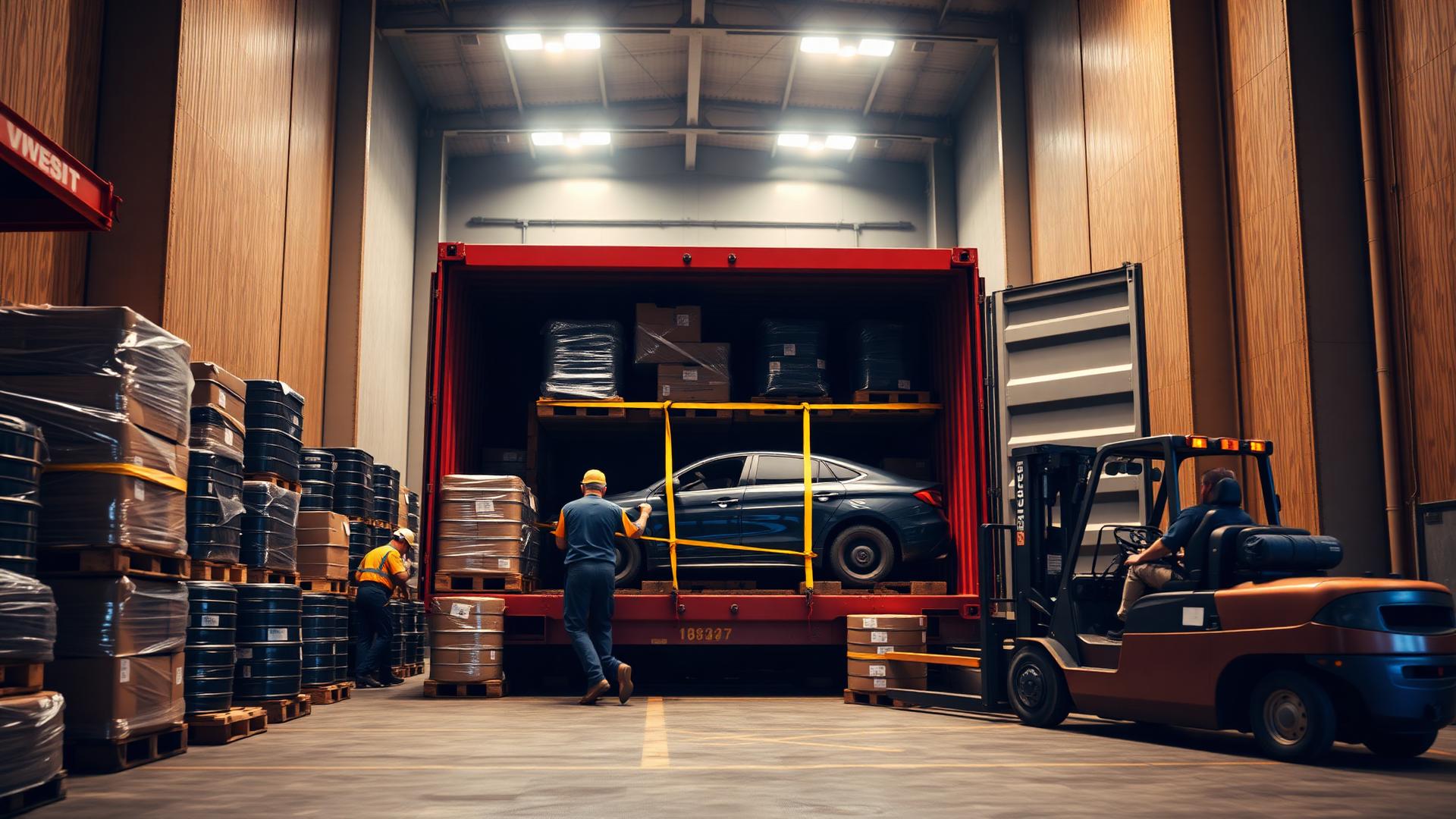
Cars, SUVs and vans positioned, chocked and secured — one vehicle or several in the same container.
Vehicles combined with boxes, barrels, furniture or appliances when the cargo allows it.
Palletized freight, cartons and machinery loaded with weight distribution in mind.
Barrels, totes, suitcases and household goods braced so nothing moves in transit.
The extra height is only useful when the load plan uses it — that is what we plan for.
We can document the load so you and the consignee know exactly what went inside.
Questions? Get an answer on WhatsApp in minutes.
Write us nowSend the list of goods or vehicles on WhatsApp, with photos if possible.
We confirm which container size fits and how the load will be arranged.
You deliver to us in Montreal, or our trucks pick the goods up.
The container is stuffed, secured, sealed and prepared for the sailing.
A container loading service in Montreal starts well before the container shows up on site. VELOX Logistics first receives the cargo at our Saint-Léonard facility, or picks it up directly from the client with our own 20-foot and 53-foot trucks. Every shipment is checked on arrival: piece count, visible condition, approximate dimensions. This step avoids surprises at stuffing time and confirms the booked container size actually matches the real volume to be loaded.
Next comes the stuffing itself, meaning the physical loading of cargo inside the 20-foot, 40-foot or 40-foot High Cube container. Our team follows a loading plan drawn up before the container arrives, which sets the loading order, the position of heavy items, and the weight balance between the front and rear of the container. Lashing follows right after: straps, wood blocking, bracing and void filling so nothing can shift during the ocean crossing to Africa.
The service ends with documentation: photos of the loading at different stages, a final piece count, and the seal placed on the container doors. The seal number is given to the client and must match the one recorded on the bill of lading at booking time. This traceability protects both the shipper and the consignee, especially on a shared container where several clients' cargo travels together to the port of discharge.
Optimizing container volume starts with a realistic loading plan, prepared before the container even reaches Montreal. That plan accounts for the exact dimensions, shape and fragility of every item to decide where it goes inside the box. Pallets and standardized cartons stack more predictably and give an even fill, while mixed cargo requires adjusting the loading order in real time to fill every open space without compromising the overall stability of the load.
Barrels, often used for oil, dry goods or personal effects, are usually blocked at floor level or wedged between more rigid items, never stacked without proper support. Furniture and appliances take up significant but irregular space: a fridge or a washer placed the wrong way can waste room that could otherwise hold cartons or barrels. That's why these items go in first, typically against the walls, before smaller cargo fills the gaps between them.
Mixed cargo, combining vehicles, furniture, barrels and cartons in the same container, takes the most planning. Each category carries its own weight and fragility constraints, but the goal stays the same: use every available cubic foot without exceeding the container's weight capacity or creating unstable zones. A well-planned stuffing job often fits more cargo than originally expected, cutting down on the number of shipments needed out of Montreal.
Loading a vehicle into a container starts with careful preparation before it ever enters the box. The vehicle needs to be driveable or capable of being winched in, with the fuel tank nearly empty, the battery disconnected or secured depending on the destination's requirements, and personal items removed or declared. These precautions tie directly into the export declaration and prevent delays during customs inspection, both in Montreal and at the port of discharge in Africa.
Where the vehicle sits inside the container depends on its size and how many vehicles are being loaded. A single vehicle is usually centered, while two vehicles in a 40-foot container are lined up front to back with calculated space left for lashing. Once positioned, the vehicle is chocked at all four wheels with wood blocks or dedicated wedges, then strapped to solid anchor points on the container floor to stop any lateral or lengthwise movement during ocean transport.
Cargo loaded alongside a vehicle has to follow strict rules: nothing heavy can rest on the body panels, and items must be secured so they don't rub against the paint or windows. Some ports of discharge require the trunk and cabin to stay empty or hold only declared personal effects. Our team knows these requirements for the main destinations served from Montreal and adjusts the loading accordingly.
Weight distribution inside a container isn't a matter of preference — it's a maritime safety requirement. A container with weight concentrated on one side or at one end can tip over during port handling, deform during loading onto the vessel, or cause cargo shifting once at sea. Heavy cargo like vehicles, full barrels or appliances needs to sit at the center and bottom of the container, with lighter items stacked above.
VGM, or verified gross mass, is a mandatory international requirement for every export container leaving Montreal. It covers the total weight of the loaded container, including the container's tare weight, the cargo, the lashing materials and the blocking equipment. This figure must be submitted to the ocean carrier ahead of the cut-off, otherwise the container can be refused for loading onto the vessel. Our team calculates and submits the VGM on time for every container we load.
A poorly balanced container carries a double risk: it can be rejected by the carrier if the declared VGM doesn't match the actual weight, or accepted but end up damaging the cargo in transit if lashing was compromised by uneven weight distribution. Either way, the consequences fall on the shipper, through added delays or claims on arrival. Careful loading planning in Montreal removes that risk from the start.
An ocean voyage to destinations like Matadi, Abidjan, Cotonou or Douala can take several weeks, exposing cargo to humidity, temperature swings and constant vessel vibration. Humidity is a particular concern inside a sealed metal container: condensation forming on the walls can damage cartons, furniture and electronics if no protection was set up before the container was closed.
Stacking plays a direct role in protecting cargo during the crossing. The most fragile or lightest cartons should always sit on top of heavier, sturdier items, never the other way around. Clear labeling on every piece, showing the contents and the consignee, makes loading in Montreal easier and also speeds up unloading and distribution on arrival, especially on a shared container where several clients pick up their own goods separately.
Before the container is finally closed, a detailed inventory of every piece loaded should be prepared and handed to the client, along with photos taken at different stages of the stuffing. This documentation serves as a reference in case of a dispute and confirms the condition of the cargo when it left Montreal. Combined with a numbered seal and careful lashing, this final step completes the preparation of a container ready for a long voyage without compromising its contents.
Questions? Get an answer on WhatsApp in minutes.
Write us nowLoading is quoted on the work involved, not on a flat rate. Understanding these factors helps you prepare your cargo so the loading slot goes quickly and stays affordable.
No fixed price is published here because each load is different. Send the number of pieces, the type of goods and your target date and we confirm what the loading slot involves.
Request a quoteImportant — Availability depends on the schedule and the type of cargo. Contact VELOX Logistics on WhatsApp to confirm the next loading slots.
Rate request
Fill in this form and our Montreal team comes back to you with the available sailing options. Every shipment departs from Montreal.
Talk to us now
Send your list of goods or vehicles on WhatsApp at +1 514-718-0282 and we confirm the loading options available.