VELOX Logistics
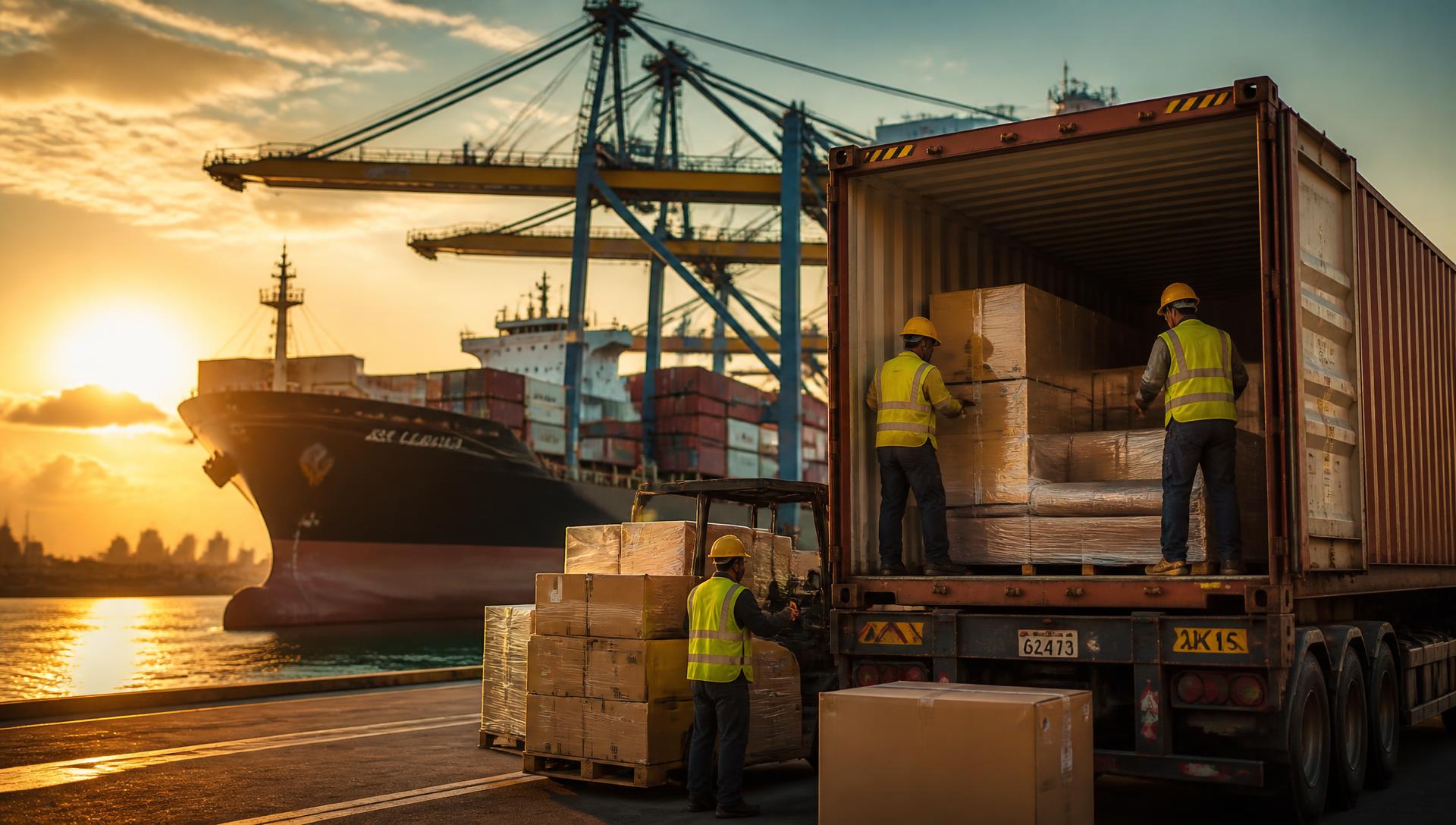
Shipping containers being loaded onto a vessel at a container terminal

Ocean freight consolidation Montreal - Benin

Ocean freight consolidation from Montreal to Cotonou, Benin, for cargo and vehicles

Ship your boxes, drums and vehicles from Montreal to the port of Cotonou with confidence

VELOX Logistics arranges ocean freight consolidation from Montreal to Cotonou, Benin. Members of the Beninese community and business owners trust our team to handle boxes, drums and personal belongings bound for the port of Cotonou and its regional connections.

Whether you are shipping a family drum, furniture, appliances or a full vehicle, our warehouse in Saint-Leonard prepares every shipment carefully. Reach out on WhatsApp to learn about the next available sailing and receive a quote tailored to your volume.

Quick answer

To send a parcel from Montreal to Cotonou, contact VELOX Logistics on WhatsApp at +1 514-718-0282, drop your cargo at our Saint-Léonard warehouse or request a pickup, then we measure it, consolidate it into a container leaving Montreal and ship it to the port of Cotonou. Customs clearance takes place on arrival.

Route essentials

Port of arrival
Autonomous Port of Cotonou, Benin
Shipping origin
VELOX warehouse, 6135 Couture Blvd, Saint-Leonard, Montreal
Shipment types
Consolidated boxes and drums, or full containers 20', 40', 40' HC
Area served
Cotonou and overland corridors toward Niger and Burkina Faso

A service built around Montreal's Beninese community

Members of the Beninese community living in Montreal and surrounding areas regularly send packages to relatives back home. VELOX Logistics designed its consolidation service around this reality, handling frequent, often modest shipments that matter greatly to families waiting in Cotonou, Porto-Novo or Parakou.

Clients drop off or arrange delivery of their boxes, drums and furniture at our Saint-Leonard warehouse. We then consolidate shipments from multiple senders into a single container heading to the port of Cotonou, which spreads logistics costs across several families instead of requiring an individual container booking.

The drum remains the most popular shipping format for personal effects, clothing and everyday goods. We advise clients on packing and filling techniques to avoid damage during ocean transport and handling at the port.

Cotonou, a gateway to Niger and Burkina Faso

The port of Cotonou does not serve Benin alone. It has long been one of the main maritime entry points for goods destined for Niger, and to some extent Burkina Faso, through the established road corridor connecting Cotonou to these landlocked countries.

Business owners supplying shops in Niamey or border regions often choose Cotonou for this reason: the overland route is well established and used daily by regional carriers. VELOX Logistics can advise clients on this type of routing depending on their actual final destination.

This regional role also affects customs clearance timelines, which vary according to traffic volume and the specific formalities required for each type of cargo. We always recommend confirming the necessary documents before shipping to avoid unnecessary delays on arrival.

Goods commonly shipped to Cotonou

Shipments to Cotonou cover a wide range of goods: clothing and textiles, small appliances, spare parts, used computer equipment, furniture and bedding items. Beninese business owners based in Montreal also ship goods intended for resale, often grouped in full containers.

Vehicles, whether passenger cars or small utility vans, form another important category. Their transport requires precise documentation, particularly regarding ownership and condition, which our team helps prepare before loading.

Drums remain the preferred solution for regular family shipments: they protect their contents well and are easy to handle during unloading, both in Cotonou and during overland transport toward the interior of the country or neighboring nations.

General customs considerations in Benin

As in most countries in the region, Beninese customs authorities require an accurate declaration of shipment contents, supported by a detailed packing list. This list facilitates inspection and reduces the risk of delays during customs clearance in Cotonou.

Goods intended for commercial resale may be subject to duties and taxes calculated based on their nature and declared value. Used personal effects generally receive different treatment, but rules evolve and should be verified case by case before shipping.

We encourage every client to provide complete and honest information about the contents of their shipments. A clear declaration, supported by relevant documents, remains the best way to speed up customs processing and limit unexpected fees for the recipient.

Why choose VELOX Logistics from Montreal

Our Saint-Leonard warehouse is easily accessible for customers throughout the greater Montreal area. We receive packages, weigh them, pack them when needed, and coordinate their loading into containers departing for Cotonou according to regular sailings, confirmed upon request.

Every sender receives tracking information for their shipment and can easily reach us with questions about the status of their package or container. This proximity is especially reassuring for families sending items of significant sentimental value.

To find out about the next available sailing to Cotonou and receive a quote tailored to your volume, contact our team on WhatsApp at +1 514-718-0282 or by email at booking@veloxlogistics.io. We respond quickly to help organize your shipment smoothly.

How to send a parcel from Montreal to Cotonou, step by step

The process is identical for a single carton or ten barrels. Here is exactly what to do to ship to Cotonou.

  1. 01

    List what you want to send to Cotonou: type of items, number of pieces, approximate dimensions and estimated weight.

  2. 02

    Send that list on WhatsApp at +1 514-718-0282 or through the form on this page: we come back with a price and the next available sailing.

  3. 03

    Pack properly: double-wall cartons, sealed barrels, protected furniture, every piece numbered and marked with the consignee's name.

  4. 04

    Drop off at our warehouse, 6135 boul. Couture, Saint-Léonard, or request a pickup anywhere in Quebec or Ontario.

  5. 05

    We measure, weigh and inventory your cargo, then confirm the exact chargeable volume.

  6. 06

    Your cargo is loaded into the container leaving Montreal for Cotonou and you receive the sailing confirmation.

  7. 07

    Your consignee in Cotonou is contacted for clearance and collection of the goods.

Which documents do you need to ship to Cotonou?

The list depends on the shipment type. For personal effects to Cotonou it stays short; for commercial cargo it grows.

  • Shipper's ID and full contact details.
  • Full consignee details in Cotonou: name, address, a reachable phone number and ID.
  • Detailed packing list: real contents of every piece, quantities, estimated value.
  • Commercial invoice for any goods intended for resale.
  • Title, purchase invoice and proof of payment for a vehicle.
  • Consignee tax identification number for commercial imports.
  • Electronic cargo tracking note when the destination country requires one (we confirm what applies to your file).

How to prepare and pack your cargo

A consolidation container to Cotonou travels for weeks and is handled several times. Packing is what separates intact cargo from damaged cargo.

  • Use new double-wall cartons rather than tired second-hand boxes.
  • Close barrels with a ring lid and seal them; fill voids so contents cannot shift.
  • Protect furniture corners, dismantle what can be dismantled and bag the hardware separately.
  • Wrap electronics in bubble film and place them in the middle of the package.
  • Number every piece (1/8, 2/8…) and write the consignee's name on at least two sides.
  • Never mix liquids and clothing in the same carton.
  • Keep a photo of the inside of each package: it helps with clearance and with your own follow-up.

What determines the price of a Montreal → Cotonou shipment?

We do not publish a fixed rate, because an honest price depends on your actual shipment and current conditions. These are the factors involved.

  • Actual volume in cubic metres, measured at the warehouse, and weight where it matters.
  • Type of cargo: personal effects, commercial goods and vehicles follow different rules.
  • Packaging: regular, stackable pieces use less space than irregular shapes.
  • Handover method: drop-off in Saint-Léonard or pickup at your address in Quebec or Ontario.
  • Delivery or pickup after clearance in Cotonou.
  • Local charges on arrival: port handling, duties and taxes set by the authorities, outside our control.
  • Timing: the weeks before major holidays are busier and space must be booked earlier.

Transit time and next sailing to Cotonou

Transit time on a Montreal → Cotonou shipment has three parts: waiting for the next loading in Montreal, the ocean leg, then clearance and handover on arrival. We do not publish a guaranteed duration, because it depends on the vessel booked, the calls made and port conditions at the time.

What we do guarantee is transparency: at booking we give you the Montreal loading date and the carrier's estimate for Cotonou, and we tell you if it changes.

How does customs clearance work in Cotonou?

On arrival the cargo is presented to the Beninese customs administration. Duties and taxes are assessed on the nature, quantity and declared value of the goods: they are set by the local authorities and are not part of our freight rate.

An accurate declaration speeds everything up. A carton described as "miscellaneous" invites inspection; the same carton described as "12 pairs of shoes, 20 t-shirts, 3 bed sheets" clears faster. That is why we build a complete packing list before departure from Montreal.

Your consignee must be reachable and hold valid ID to collect the goods in Cotonou. We can point you to a local customs broker if you do not have one.

Tracking your shipment

Every shipment to Cotonou gets a file reference. You receive the Montreal loading confirmation, then vessel departure details and the estimated arrival.

Follow-up mainly happens on WhatsApp at +1 514-718-0282: you write, we answer with the real status of your file. For containerised cargo the container number also allows tracking with the carrier.

Restrictions and prohibited goods for Cotonou

Some goods can never travel in consolidation: flammables, pressurised aerosols, gas cylinders, chemicals, weapons, ammunition, protected species, counterfeits and cash. This applies to Cotonou as to every destination we serve.

Other goods are allowed but regulated on import: medicines, foodstuffs, electronics in commercial quantities, used auto parts, or vehicles subject to age limits. Those rules belong to the Beninese customs administration and can change.

When in doubt, send us a photo or the exact description before packing: removing one item in Montreal is always easier than holding a whole container on arrival.

Consolidation vs full container to Cotonou: side by side

Two formats, two logics. This table sums up what actually changes for your shipment.

CriterionConsolidationFull container
Suitable volumeFrom a few cartons to several cubic metresFrom a volume close to a 20-foot container
CostYou pay for the space you useYou pay for the container regardless of fill
Departure dateDepends on the next consolidated container to CotonouYou pick the loading date with the carrier
LoadingAt our Saint-Léonard warehouseAt your site or the warehouse, container spotted on location
CustomsShared file, cargo split on arrivalOne single file in your name
Best forFamilies, barrels, small traders, regular shipmentsImporters, large volumes, sensitive cargo

Pre-shipment checklist for Cotonou

Run through this list the day before drop-off: it prevents 90% of file delays.

  • Packing list written, piece by piece, with real quantities.
  • Pieces numbered and marked with the consignee's name.
  • Consignee details in Cotonou verified, with a phone number that answers.
  • No prohibited item and no forgotten aerosol at the bottom of a carton.
  • Invoices available for commercial goods.
  • Vehicle documents ready, if applicable.
  • Photos of package contents kept on file.
  • Next sailing confirmed with our team before drop-off.

Mistakes to avoid on the Montreal → Cotonou route

  • Describing contents vaguely

    "Personal effects" or "miscellaneous" is the fastest way to get your cartons opened on arrival. Be specific.

  • Underestimating volume

    A quote based on an optimistic guess gets corrected after measuring at the warehouse. Better to declare accurately upfront.

  • Packing in tired boxes

    A carton reused three times collapses under stacked weight during the crossing.

  • Giving an unreachable consignee number

    In Cotonou clearance stalls completely if nobody answers the phone.

  • Waiting until the last minute before the holidays

    Containers fill in advance: booking late means sailing on the next loading.

  • Slipping in a prohibited item

    A single aerosol can delay the whole container and every other customer in it.

Accepted and restricted goods for Cotonou

Before preparing your shipment to Cotonou, review the categories of goods we accept for consolidation or full container loads, as well as those that cannot be shipped by sea.

Cargo we accept

  • Clothing and textiles
  • Drums with personal effects
  • Appliances and small electronics
  • Furniture and bedding items
  • Automotive spare parts
  • Computer and electronic equipment
  • Passenger cars and light utility vehicles
  • General merchandise for business owners

Cargo we cannot ship

  • Flammable or explosive materials
  • Chemicals and hazardous substances
  • Weapons and ammunition
  • Unpackaged perishable goods
  • Protected animal species
  • Cash and undeclared high-value items

How your shipment works

  1. 01

    Initial contact

    You reach out via WhatsApp or email to describe the type and volume of your shipment to Cotonou.

  2. 02

    Warehouse drop-off

    You bring or arrange delivery of your boxes, drums or vehicle to our Saint-Leonard warehouse.

  3. 03

    Preparation and packing

    Our team checks, weighs and packs your goods according to ocean shipping standards.

  4. 04

    Container loading

    Your shipment is consolidated with other cargo and loaded into a container heading to Cotonou.

  5. 05

    Arrival in Cotonou

    The container reaches the port of Cotonou, where customs clearance and final delivery are arranged.

Next departures — Montréal → Cotonou

Ocean departures from Montreal.

Contact us for the next available departure.

Departure dates are subject to carrier schedules and may change.

Need a full container instead?

For larger volumes we book the container with the carrier and organise the loading in Montreal.

Frequently asked questions

How do I send a parcel from Montreal to Cotonou?

Message us on WhatsApp at +1 514-718-0282 describing your shipment. We give you a price and the next sailing, you drop the cargo at 6135 boul. Couture in Saint-Léonard (or we collect it), and we measure and load it into a consolidation container leaving Montreal for Cotonou.

How much does shipping to Cotonou cost?

There is no single rate: price depends on real volume, cargo type, handover method and local charges on arrival. Send us your packing list with dimensions and we build an accurate price, without invented figures.

Can I send personal effects to Cotonou?

Yes. Personal effects — clothing, shoes, household items, bedding, small appliances — make up most consolidation shipments to Cotonou. They simply need to be itemised on the packing list.

Can I send clothing or used-clothing bales?

Yes, clothing travels very well in consolidation to Cotonou, in cartons, vacuum bags or compressed bales. For used clothing intended for resale, a commercial invoice is required.

Can I send a pallet?

Yes. Pallets are an ideal consolidation format: forklift-friendly, stackable and easy to measure. Wrap it firmly and give us its dimensions and weight with your rate request for Cotonou.

Which documents are required for Cotonou?

At minimum: your ID, full consignee details in Cotonou and a detailed packing list. Add a commercial invoice for trade goods, and the title plus purchase invoice for a vehicle.

How long does shipping to Cotonou take?

Transit depends on the next loading in Montreal, the vessel booked and arrival conditions. We do not promise a fixed duration: we give you the loading date and the carrier's estimate at booking, then keep you informed.

How does customs work in Cotonou?

Cargo is presented to the Beninese customs administration, which assesses duties and taxes on the nature, quantity and declared value of the goods. Those charges are paid on arrival by the consignee and are not included in the freight price.

Where do I drop off cargo in Montreal?

At our warehouse, 6135 boul. Couture, Saint-Léonard, QC H1P 3G7. Let us know before coming so someone can receive and weigh your cargo. Pickup can also be arranged across Quebec and Ontario.

How do I find out the next sailing to Cotonou?

Message us on WhatsApp at +1 514-718-0282 and we confirm the next available loading date to Cotonou. We do not publish a fixed calendar because real dates depend on container fill and carrier schedules.

Can I track my shipment?

Yes. You get a file reference, the Montreal loading confirmation, then sailing details and an estimated arrival. Follow-up happens on WhatsApp, answered by the person actually handling your file.

Consolidation or a full container for Cotonou?

Below the volume of a 20-foot container, consolidation is almost always cheaper. Above that, or if you want to choose the loading date and keep your cargo separate, we book a full container to Cotonou.

Which goods are prohibited to Cotonou?

Flammables, pressurised aerosols, gas cylinders, chemicals, weapons, ammunition, protected species, counterfeits and cash. If you are unsure about an item, send us a photo before packing it.

Can I ship commercial goods to Cotonou?

Yes, we regularly ship resale lots to Cotonou. You need a commercial invoice, an accurate customs description and, in some cases, the consignee's tax identification number.

Can I ship a vehicle to Cotonou?

Yes, in a container only. VELOX Logistics does not offer RoRo service: vehicles are secured inside a container, alone or with cargo, departing from Montreal. Title and purchase invoice are required.

I live in Ontario — can I still ship with you?

Yes. Customers in Toronto, Mississauga, Brampton, Hamilton and Ottawa ship to Cotonou regularly. The cargo is simply moved to our Montreal warehouse, where the container is loaded.

Is Cotonou suitable for used-clothing bales?

Yes, it is one of our most used routes for resale clothing. A commercial invoice and an accurate description of contents are essential.

Can I ship a motorcycle to Cotonou?

Yes, in a container. The bike is drained, the battery disconnected and the unit secured inside the container leaving Montreal; we do not use RoRo service.

How long does ocean shipping to Cotonou take?

Transit time depends on the shipping line, the vessel assigned, customs clearance and overland transport once the cargo arrives in Benin. We confirm a precise estimate at the time of booking, based on the reserved sailing and the final destination of your goods.

Can I ship a drum filled with clothing and various items?

Yes, drums are a common and popular way to ship personal effects. We recommend distributing weight evenly and avoiding liquids or prohibited items to facilitate handling and customs clearance upon arrival.

Can a vehicle be shipped to Cotonou through consolidation?

Yes, vehicles can be shipped in a full container or sometimes shared depending on size. Accurate documentation regarding ownership and condition is required, and our team assists in preparing these documents.

Does the port of Cotonou also serve Niger?

Yes, Cotonou is frequently used as an entry point for goods destined for Niger and Burkina Faso, via a well-established road corridor. We can arrange appropriate routing if your final destination lies beyond Benin.

How do I find out the cost of shipping to Cotonou?

Pricing depends on volume, weight and cargo type. Contact us on WhatsApp at +1 514-718-0282 with your shipment details to receive a personalized estimate and learn about the next available sailing.

What documents are needed for customs clearance in Cotonou?

A detailed packing list is required, and depending on the type of goods, additional documents may be requested by Beninese customs. We guide you through preparing these documents before shipping to limit delays upon arrival.
CallWhatsAppGet Rate