FCL booking
A full container reserved in your name: 20ft, 40ft or 40ft High Cube, loaded with your own cargo only.
Ocean freight booking from Montreal
VELOX Logistics arranges container booking from Montreal to Africa and other overseas destinations: 20ft, 40ft and 40ft High Cube, FCL and shared containers.
Container Booking Available for Customers in Quebec & Ontario — bookings are handled through our Montreal operations.
Global shipping network
Access competitive ocean freight rates and container booking solutions with leading global shipping lines through VELOX Logistics.

MSC
Mediterranean Shipping Company

CMA CGM
CMA CGM Group

Maersk
A.P. Moller - Maersk

Hapag-Lloyd
Hapag-Lloyd AG

ONE
Ocean Network Express

COSCO Shipping
COSCO Shipping Lines

Evergreen Marine
Evergreen Line

ZIM
Integrated Shipping Services

OOCL
Orient Overseas Container Line

Yang Ming
Yang Ming Marine Transport

PIL
Pacific International Lines
MSC
Mediterranean Shipping Company
CMA CGM
CMA CGM Group
Maersk
A.P. Moller - Maersk
Hapag-Lloyd
Hapag-Lloyd AG
ONE
Ocean Network Express
COSCO Shipping
COSCO Shipping Lines
Evergreen Marine
Evergreen Line
ZIM
Integrated Shipping Services
OOCL
Orient Overseas Container Line
Yang Ming
Yang Ming Marine Transport
PIL
Pacific International Lines
A booking is the reservation of container space on a vessel: equipment type, sailing, port of loading and port of discharge. VELOX Logistics handles that reservation for clients shipping from Montreal — importers, exporters, vehicle dealers, wholesalers and families sending goods to Africa. Tell us what you are shipping and where it must arrive, and we come back with the options currently available.
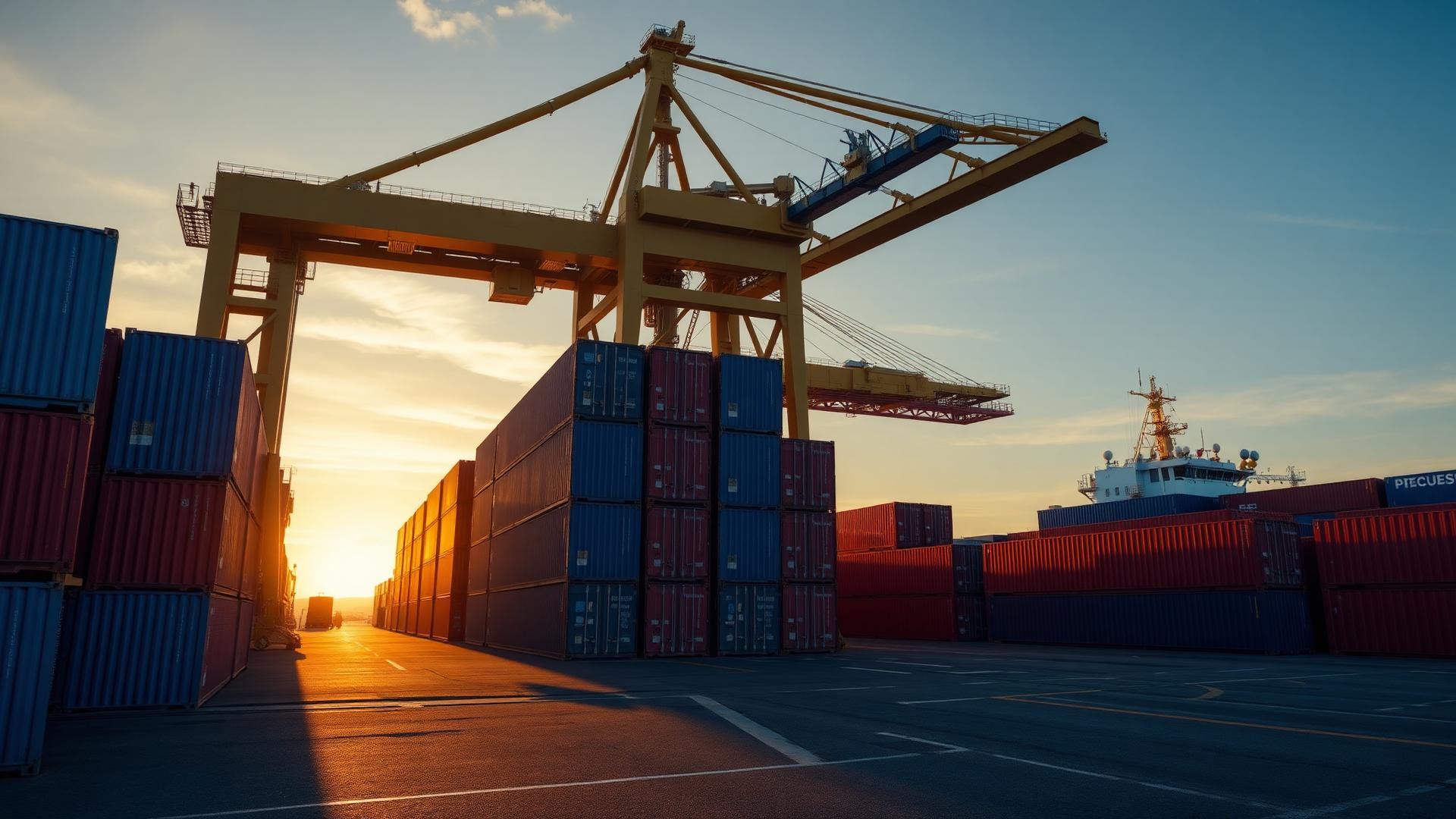
A full container reserved in your name: 20ft, 40ft or 40ft High Cube, loaded with your own cargo only.
When a full container is too much, your cargo travels in a consolidated container with other shipments.
The most common equipment for vehicles, furniture and high-volume goods leaving Montreal.
Bookings toward Kinshasa/Matadi, Abidjan, Cotonou, Lomé, Douala and inland destinations such as Burkina Faso and Mali.
Bill of lading instructions, VGM, Canadian export declaration and the paperwork the sailing requires.
We can also load the container for you, so the reservation and the stuffing are handled by the same team.
Questions? Get an answer on WhatsApp in minutes.
Write us nowMessage us on WhatsApp with the cargo, the volume and the destination.
We confirm the equipment and the sailings currently available for your file.
Once you accept, the container space is reserved and we share the cut-off information.
The container is loaded — by you or by our team in Montreal — then documented and shipped.
An ocean freight booking is more than a price quote: it is the firm reservation of container space on a specific vessel, for a specific voyage. It locks in the equipment type — 20ft, 40ft or 40ft High Cube — along with the port of loading, Montreal, and the port of discharge at destination. Once the carrier issues the booking, a booking number is assigned, and that reference is used for every step that follows: empty container release, stuffing, customs filings and the bill of lading.
The booking also carries the sailing date, meaning the vessel's planned departure, and the terminal where the container must be delivered in Montreal. These details shift week to week depending on carrier capacity and demand on the trade lane. That is why VELOX Logistics checks live availability at the time of the request rather than promising space in advance: a booking is never guaranteed until the carrier confirms it in writing, even if space looked open the day before.
The cut-off is built into the booking itself: the deadline for delivering the loaded container to the terminal, known as cargo cut-off, and the deadline for submitting bill of lading instructions, known as documentation or SI cut-off. Missing a cut-off usually means losing the reserved sailing and waiting for the next available departure with a new booking number. Understanding these deadlines at the time of reservation avoids surprises for shippers planning a departure from Montreal to Africa.
Choosing equipment starts with volume and weight, not just the number of pieces. A 20ft container suits heavy, compact cargo — mechanical parts, bagged cement, dense goods — because its payload capacity is proportionally higher than a 40ft for the same maximum weight allowed on road and at sea. For bulkier but lighter cargo, a 40ft or 40ft High Cube gives more cubic space without pushing past weight limits.
The 40ft High Cube, roughly 30 centimeters taller than a standard 40ft, is often the default choice for vehicles, furniture, appliances and other voluminous but light cargo leaving Montreal for West and Central Africa. It allows cartons to be stacked higher or a vehicle to be loaded alongside personal effects, making better use of the space paid for without adding another container.
When a shipment does not fill a full container, a shared container — often called LCL or groupage — lets the shipper pay only for the space used. The cargo is consolidated with other clients' shipments inside one FCL container arranged by the forwarder. This is a common option for families or small businesses sending a few cubic meters to Bamako, Ouagadougou or Abidjan without justifying a full container reservation.
The process starts with a detailed request: type of cargo, approximate volume or weight, destination port or city, and preferred container size if the client has one. VELOX Logistics passes this information to the carriers serving Montreal to check available space on upcoming sailings toward the intended port of discharge. This step often involves comparing several carriers, since frequency and capacity vary by destination and time of year.
Once options come back, the client confirms the equipment, the approximate departure date and the shipping terms. The carrier then issues the booking with a reference number, and the empty container is released for stuffing — either at the client's location or at facilities in Montreal. This is when the cargo cut-off and documentation cut-off dates are communicated, along with the VGM requirement, the verified gross mass of the loaded container that must be declared before loading.
The full container must reach the Montreal terminal before the cut-off, with VGM declared and export paperwork in order. Once received and loaded aboard the vessel, the carrier issues the bill of lading, the document that proves the contract of carriage and serves as title to the goods at destination. Any delay in submitting bill of lading instructions past the documentation cut-off can hold up the bill of lading itself, even if the container is already loaded on the ship.
Four documents show up in nearly every ocean booking file leaving Montreal: bill of lading instructions used to prepare the final bill of lading, the Canadian export declaration required by the border agency for commercial shipments abroad, the VGM certificate confirming the verified gross weight of the loaded container, and the commercial invoice paired with a packing list detailing exactly what is inside the shipment. These documents need to match each other precisely — a mismatch in weight or description between the invoice and the bill of lading is a frequent cause of holds.
The most common mistake is submitting bill of lading instructions late, usually because the exact consignee name, full address or precise cargo description are not finalized by the documentation cut-off. A second frequent issue involves VGM: an estimated weight instead of an actually measured one can be rejected by the terminal, which blocks loading onto the vessel even when the booking itself is confirmed.
An incomplete export declaration, or one filed after the container has already departed, can also trigger penalties or an administrative hold, especially for vehicle shipments or high-value commercial cargo. VELOX Logistics recommends preparing these four documents as soon as the booking is confirmed, rather than waiting until the cut-off approaches, to leave room for corrections on the bill of lading or invoice if needed.
Bookings from Montreal to West and Central Africa target specific discharge ports depending on the final destination: Abidjan for Ivory Coast, Cotonou for Benin, Lomé for Togo, Douala for Cameroon, Dakar for Senegal, or Matadi for the Democratic Republic of Congo. The choice of port depends on where the cargo is ultimately going and on the transit arrangements available for countries without direct sea access.
For inland destinations such as Burkina Faso or Mali, the container first arrives at a coastal port — most often Abidjan or Lomé — before moving overland or by rail to Ouagadougou or Bamako. This step adds time and requires a local forwarder or consignee who takes charge of the container on discharge, manages cross-border transit formalities and arranges inland transport to the final city.
The consignee named on the bill of lading plays a central role in this chain: they receive the arrival notice, clear the cargo through customs at the port or entry point, and take delivery of the container. Preparing this link before the container even leaves Montreal — confirming exact consignee details and sending a copy of the documents as soon as they are issued — helps avoid customs delays and container demurrage at the arrival port.
Questions? Get an answer on WhatsApp in minutes.
Write us nowVELOX Logistics does not publish fixed prices, because ocean rates change with the season, the carrier and the trade lane. What we can explain clearly is what makes your quote go up or down, so you can compare offers and plan your budget before you commit.
These are cost drivers, not a price list. For the current rate and the next available sailings, send us your cargo details and destination — by form or on WhatsApp — and we come back with real, dated options.
Request a quoteImportant — Rates, sailing dates and equipment availability change constantly. Contact VELOX Logistics on WhatsApp for the current rate and the next available departures.
Rate request
Fill in this form and our Montreal team comes back to you with the available sailing options. Every shipment departs from Montreal.
Talk to us now
Write to us on WhatsApp at +1 514-718-0282 with your cargo and destination, and we come back with the booking options available.