
Every company that buys stock eventually accumulates unsold goods. An optimistic forecast, a supplier who ships late, a collection that does not land, a customer who cancels an order: the result is the same, merchandise sitting still. The question is not whether it will happen, but which channel to use when it does.
In Quebec and Ontario several surplus sales channels coexist, with very different pricing and timing logic. The same lot can be worth appreciably more or less depending on the channel chosen, without the goods changing at all. Understanding that structure lets you choose deliberately rather than accepting the first offer that arrives.
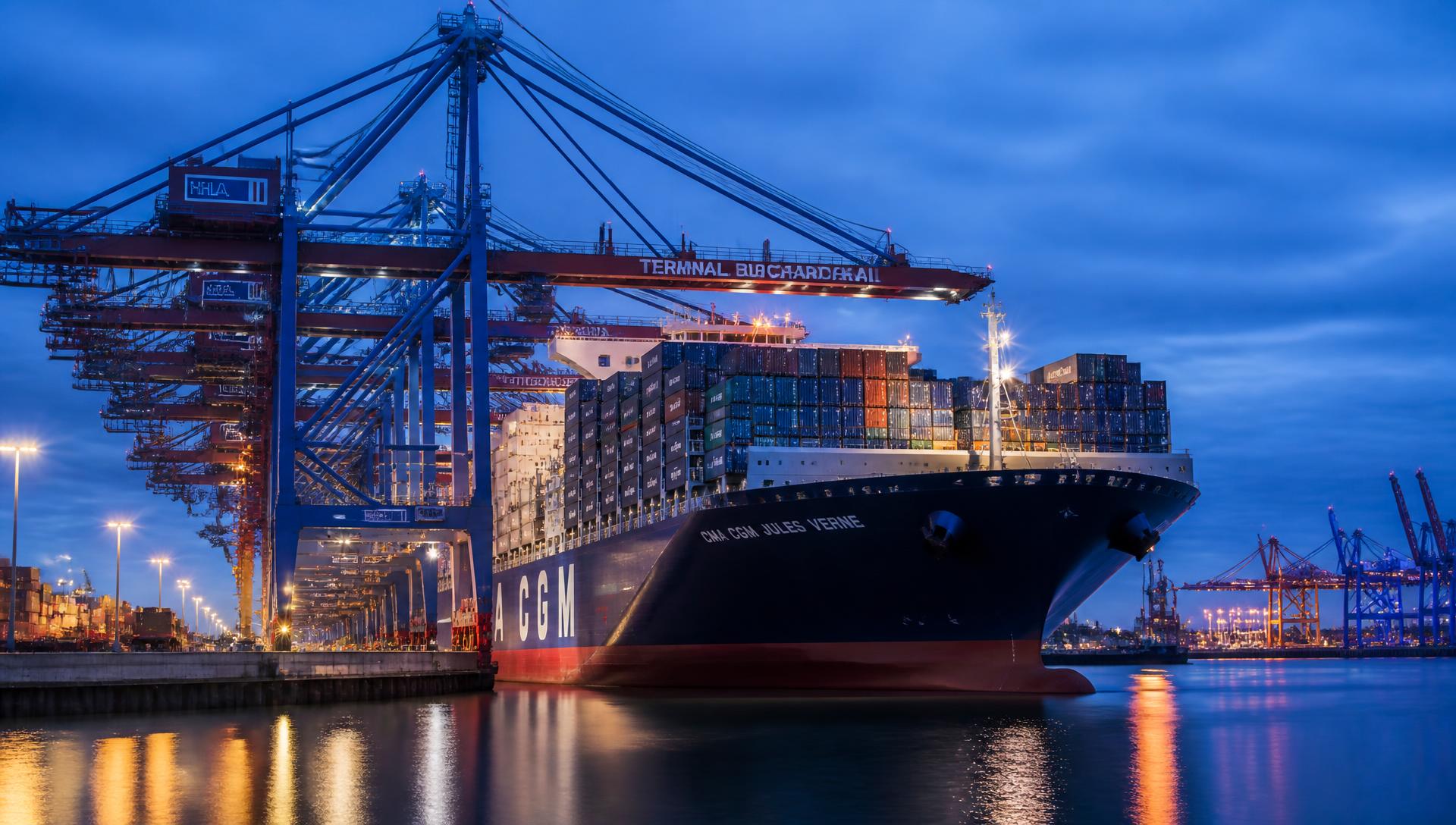
This article reviews the available channels, how to evaluate them, the preparation that genuinely raises the value of a lot, and the outbound logistics — including container export from Montreal, which remains the departure point for all our international shipments.
The main surplus sales channels
There are five families of channels, each with its own price and timing profile. The wrong instinct is to compare them on headline price alone; you also have to account for internal management time, non-payment risk and logistics cost.
| Channel | Relative price | Timing | Best when |
|---|---|---|---|
| Local liquidator | Low to medium | Very short | Volume has to leave fast |
| Sector wholesaler | Medium | Short to medium | The lot is homogeneous and identifiable |
| Online lot sales | Medium to high | Medium | You have management time available |
| Exporter / overseas buyer | Medium to high | Medium | Volume reaches a container |
| Recovery channel | Low | Short | Goods are no longer sellable |
Online lot sales sometimes deliver the best unit prices, but they consume administrative time: photographs, answering questions, handling payments, coordinating partial pickups. For a company whose team is already busy, that time has a real cost that belongs in the comparison.
Why export often changes the equation
The Canadian domestic market is relatively small and local surplus buyers know each other. When a lot circulates in that market, offers tend to look alike. Export, by contrast, puts your lot in front of different demand, in markets where the product retains strong use value and competing supply is scarcer.
That is especially true of utility categories: clothing and textiles, footwear, household goods, hardware, tools, small appliances, flat-pack furniture, school supplies. Those products resell well in several African and Caribbean markets through structured distribution circuits.
The trade-off is logistical. Exporting requires sufficient volume, careful preparation, correct documentation and a partner able to organise loading and the ocean departure. That is precisely a freight forwarder's role: turning a lot standing still in a warehouse into a documented shipment leaving Montreal.
Evaluating a purchase offer seriously
A surplus offer is never just a price. Three elements matter as much, sometimes more.
The first is the scope of the offer: does it cover the entire lot, or only the best categories? A partial offer leaves the seller with the hardest residue, which often cancels out the apparent price advantage.
The second is payment terms. Full payment before removal beats a higher price paid after resale. Consignment arrangements transfer commercial risk to the seller while removing their control over the goods.
The third is who handles logistics. An offer where the buyer collects at their own cost from the dock is worth more than a nominally higher offer where the seller has to organise palletising, transport and loading. Those costs are real and should be quantified before deciding.
The preparation that actually raises value
Some preparation work raises the value of a lot well beyond its cost. Other work adds nothing. The distinction matters, because warehouse time is limited.
What raises value:
- Separating the main categories rather than presenting an indistinct mixed lot.
- Removing clearly unusable items, which drag down the perception of the whole lot.
- Counting and documenting quantities by category, even approximately.
- Photographing in decent light, pallet by pallet, without staging.
- Palletising and wrapping, which proves to the buyer that the lot is ready to load.
What generally adds nothing: individually reconditioning items, relabelling, deep cleaning, or sorting to a fine level of detail. That work costs more than the value it adds in a liquidation context.
The case of textiles and clothing
Used clothing and textile surplus is a special case, with a well-established global channel. It is handled in bales or loose, loads by full container and feeds markets with steady demand. Preparation rules there are specific: compression, weight per bale, category consistency and general cleanliness.
A company that regularly has textile volume benefits from structuring that flow as a permanent channel rather than a one-off liquidation. Our dedicated used clothing service describes the expected preparation and how departures from Montreal are organised.
Organising the exit without tying up your team
The operational challenge in a surplus sale is not to paralyse the warehouse while it happens. Two principles help: set a precise pickup window rather than a vague range, and hand the collection to a carrier that arrives with equipment matched to the dock.
Depending on destination and volume, the exit takes one of three forms: road transport to a Canadian buyer, a full container load for an overseas buyer, or a partial shipment through a consolidation solution when the volume does not fill a container. In all three cases, dock scheduling and forklift availability determine how long the operation takes.
Residue: plan for it from the start
A surplus lot always contains a non-marketable fraction. Planning its treatment at the start of the operation stops it reappearing in the warehouse six months later. Depending on the material, part of it can be directed to recovery rather than landfill, which reduces disposal cost. Our collection and recycling division handles those residual flows.
Turning surplus management into a process
Companies that manage surplus well do not treat it as an emergency. They set a rule: beyond a certain stock age, goods move automatically into the liquidation channel. That discipline prevents accumulation, frees space continuously and improves the price obtained, because the product leaves before it is completely out of date.
To have a lot evaluated the process is simple: a description, photographs, an approximate volume and a pickup address. You can submit your lot through our surplus liquidation page, and we come back with channel and logistics options.
[[CTA]]
Set a reserve price before you approach the market
A seller with no floor price almost always accepts the first serious offer, for lack of a reference point. Setting a reserve price before approaching buyers completely changes the negotiating dynamic.
The calculation is straightforward: start from the cost of holding the lot for the months a better sale would take, add the disposal cost if the lot eventually had to be written off, then compare that with the net amount expected from each channel after logistics costs. That figure gives the threshold below which it is better to wait or change channel.
Two reference points help frame the decision. First, a lot occupying productive space costs more than one stored in dead space: opportunity cost belongs in the calculation. Second, surplus value declines continuously, particularly for seasonal products, which makes waiting expensive beyond a few weeks.
In practice the most effective approach is to approach three channels simultaneously with the same file, compare net offers once logistics are included, then decide within a deadline set in advance. That discipline avoids the two usual extremes: selling too low out of haste, or holding a lot for two years waiting for an ideal buyer who never appears.
Keep the paperwork behind every surplus sale
Surplus sales are often handled informally, which creates problems later. Each sale should leave three documents behind: a written agreement stating the lot is sold as is, a commercial invoice matching the amount actually received, and a removal note signed when the goods leave the site.
Those three documents settle the questions that come up months later — what exactly was sold, at what value, on what date, and to whom. They also matter for insurance and for the year-end write-down of inventory, where an undocumented disposal is far harder to justify than a documented sale.
FAQ
Which channel gives the best price for unsold inventory?
It depends on the lot. A homogeneous, high-volume lot often does better on export; a fragmented lot liquidates better locally, faster but at a lower price.
Should the goods be sorted before seeking offers?
Sorting by broad category is enough. Fine sorting costs more than it returns in a liquidation context.
Do you buy unsold inventory?
We submit lots for evaluation and organise the outbound logistics. Depending on the category, the lot is directed to a buyer, to export or to recovery.
Can a lot that does not fill a container still be exported?
Yes, through consolidation to selected destinations. Departures are from Montreal.
Who handles the export documents?
We prepare the shipping documentation tied to transport and tell you which commercial and customs documents you need to provide.
How long does it take to clear a warehouse zone?
With a palletised lot and an accessible dock, loading is usually completed in a single scheduled visit.
To discuss a surplus lot or schedule a pickup, message us on WhatsApp at +1 514-718-0282 or review our services departing Montreal.