
Customer returns have become a permanent feature of commerce, particularly since online selling became mainstream. A significant share of items sold comes back to the shipper, often in perfect condition, sometimes with damaged packaging, sometimes genuinely defective. For the business, that reverse flow raises a simple question: what do you do with merchandise that is no longer new but is not waste either?
Graded goods follow the same logic. A product whose packaging suffered in the warehouse, a run with a cosmetic defect, a lot whose labelling no longer matches the season: none of that is unsellable, but none of it can go back on the shelf at the original price. Those two flows — returns and graded stock — represent value that is frequently underexploited.
This article explains how to structure the handling of returns and graded goods: classification, the value-recovery decision, available channels, preparation for resale or export, and outbound logistics from Quebec and Ontario, with ocean departure from Montreal for exported lots.
Classify before you decide
An unclassified lot of returns sells badly, because the buyer then has to assume the worst. The first operation is therefore to establish simple, consistent condition grades. Three or four grades are enough; adding levels complicates sorting without improving the price.
| Grade | Description | Typical outlet |
|---|---|---|
| A — like new | Intact product, original packaging | Resale, wholesaler |
| B — damaged packaging | Functional product, damaged box | Liquidator, export |
| C — cosmetic defect | Marks of use, functional | Export, secondary market |
| D — non-functional | Defective, incomplete | Parts, recovery |
The benefit of this classification is twofold. It lets you sell the higher grades at a better price rather than burying them in an average lot, and it lets you route grade D to a recovery channel instead of leaving it to contaminate marketable lots.
The real cost of sorting
Sorting has a labour cost that has to be weighed against the price gain achieved. The rule of thumb is simple: the higher the unit value of the product, the more fine sorting pays. For low unit value items, a rough two-grade sort beats a detailed sort that consumes hours.
For companies with a steady returns volume, it is usually better to standardise a permanent sorting station with a written protocol than to improvise each time a pile builds up. A simple station — table, labelled bins by grade, scale, camera — allows the flow to be processed continuously and avoids mountains of untreated returns.
Value-recovery channels
Once graded, the merchandise has several outlets with differing prices and timelines.
Direct resale suits grade A, where it is compatible with commercial policy and the product is still in the catalogue. Selling to a local liquidator quickly absorbs grades B and C at a reduced price. Selling to a sector wholesaler produces a better result where the lot is homogeneous and identifiable by brand or category.
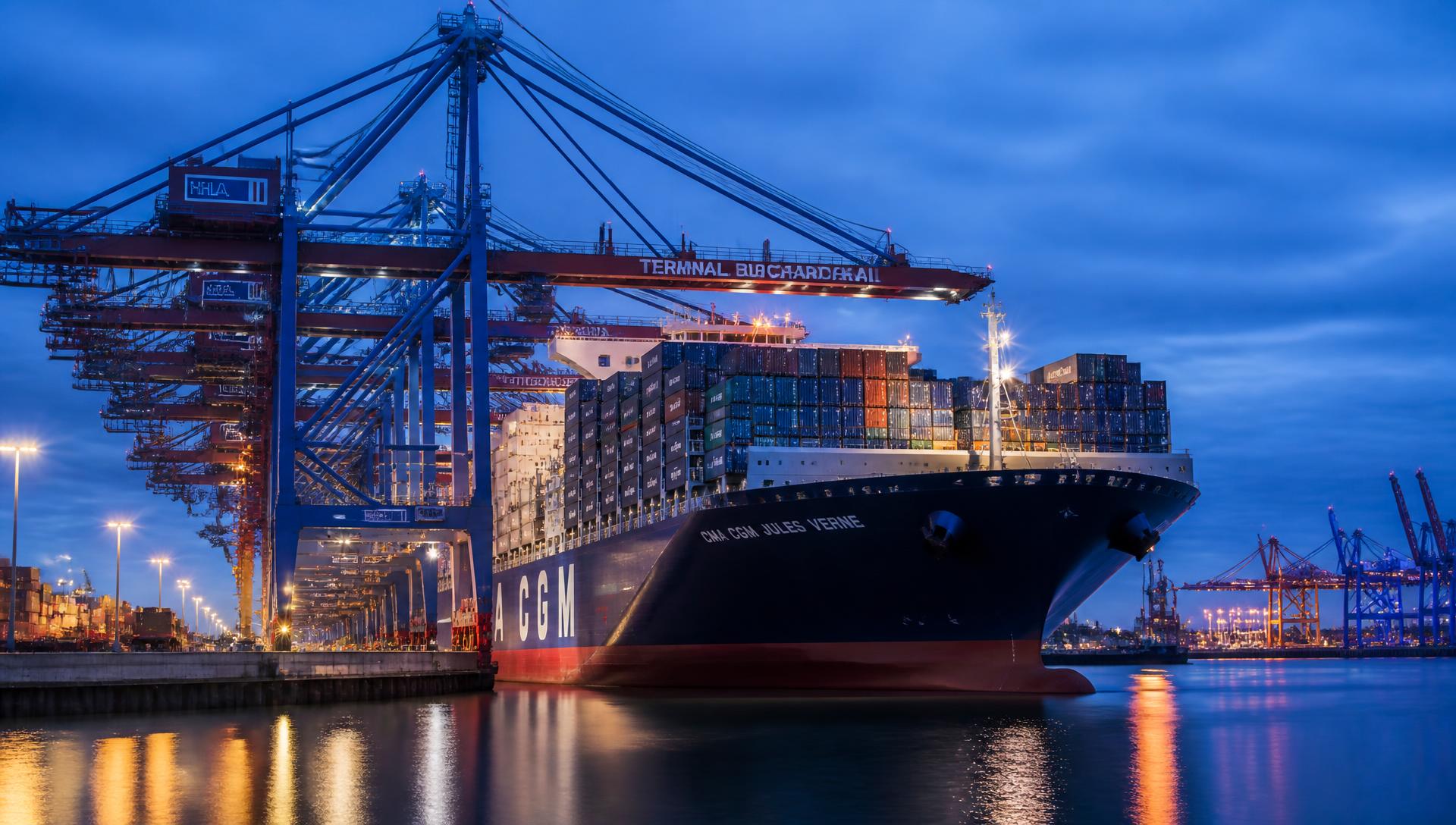
Container export is particularly relevant for grades B and C in volume. In several African and Caribbean markets, a functional product with imperfect packaging retains full use value and sells without difficulty. That is often the channel that recovers the most value from those grades, provided volume is sufficient.
Grade D belongs to recovery: dismantling for parts, material recovery or recycling depending on composition.
Preparing a returns lot for export
A returns lot destined for export requires a few extra precautions compared with a lot of new goods. Three points come up consistently.
First, the description must be accurate. An overseas buyer who receives a lot described as grade B and finds grade D will not reorder, and may dispute payment. Reputation is worth more than a few dollars gained from an optimistic description.
Second, some items must be removed: loose lithium batteries, aerosols, chemicals, items restricted at destination. Those categories fall under specific rules and cannot travel mixed with general merchandise.
Third, packaging has to be redone. Returns often arrive in mismatched, tired cartons. Regrouping them into uniform cartons and then palletising increases loading density and reduces the unit cost of transport.
- Remove restricted items before palletising.
- Repack into uniform cartons and fill them completely.
- Label each pallet with grade and category.
- Produce a consistent packing list, pallet by pallet.
- Document the liquidation value with a clear invoice.
Textiles, clothing and footwear
Textile returns and graded clothing belong to a specific channel that is more mature than for other categories. The product is handled loose or in bales, with precise requirements on cleanliness, compression and category consistency. Demand in destination markets is steady, which makes this flow more predictable than others.
A company that regularly generates graded textiles benefits from treating that flow as a permanent programme. Our dedicated used clothing service sets out the expected preparation and how departures from Montreal are organised.
Organising the exit
Depending on volume and destination, the exit takes three forms. For a Canadian buyer, a road pickup at the dock is enough. For an overseas buyer with volume, a full container is loaded and shipped from Montreal. For more modest volume, a consolidation solution shares container space with other shipments to the same destination.
In all three cases the practical constraint is the same: a lot that is palletised, labelled and gathered in an accessible area loads quickly. Our commercial pickup service works directly on site, with a truck matched to the available access.
Turning a cost into a managed flow
Returns and graded stock are often treated as an administrative problem nobody wants. Companies that manage them as a logistics flow gain three things: measurable value recovery, a cleaner warehouse, and better visibility on return causes, which eventually reduces volume at source.
The practical starting point is an evaluation. With a description of the grades, approximate volumes and a few photographs, each grade can be routed to the right channel. You can submit a lot for evaluation through our surplus liquidation page.
[[CTA]]
Reducing return volume at source
Recovering value from returns is necessary, but reducing their volume is more profitable still. Companies that track returns by cause rather than by overall volume quickly identify the most effective levers.
Four causes dominate most files. The first is the gap between the product description and reality: imprecise dimensions, flattering photos, incomplete specifications. The second is insufficient packaging, which creates transit damage and therefore avoidable returns. The third is order-picking error, often linked to visually similar references. The fourth is size or compatibility, particularly in clothing, footwear and technical parts.
Simple tracking, with a reason code entered when each return is received, is enough to reveal the distribution. From there the corrections are often modest: adding two measurements to a product page, reinforcing a carton, physically separating two references that get confused on the picking line.
This approach has a useful side effect on liquidation. Fewer returns means more homogeneous lots, better graded and therefore better valued when they go to export. A controlled returns flow produces a higher proportion of grade A and B stock, which directly improves the average price obtained and reduces the share routed to recovery.
Finally, documenting this tracking makes supplier discussions easier. When the same defect recurs on an imported reference, having numbers allows you to negotiate compensation or a specification change rather than absorbing the loss silently.
Building a written grading protocol
Grading only works if two different employees apply it the same way. A one-page written protocol solves most of the inconsistency: it defines each grade with concrete criteria, names the tests to perform, and states where borderline items go.
Three rules make a protocol usable. Borderline items always go down a grade, never up, which protects the buyer relationship. Any item with a safety concern is pulled from the commercial flow regardless of appearance. And every grade decision is recorded against the pallet number, so a later dispute can be traced to a specific batch rather than argued in general terms.
FAQ
Do returns need to be sorted before requesting an evaluation?
A rough classification into two or three condition grades is enough to get realistic options.
Do defective goods have any value?
Sometimes, for parts or material recovery. Otherwise they are routed to a recovery channel rather than sold.
Can customer returns be exported?
Yes, where the description is accurate and restricted items have been removed. Departures are from Montreal.
How much volume is needed for a full container?
It depends on density after palletising. Smaller volume can move by consolidation to served destinations.
Do you buy returns lots?
We submit each lot for evaluation and organise the logistics. Depending on grade and volume, the lot is routed to a buyer, to export or to recovery.
Can you collect without a loading dock?
Yes, with a truck matched to the site access and the handling required.
To have a lot of returns or graded goods evaluated, message our team on WhatsApp at +1 514-718-0282 or review our services departing Montreal.