🏷️ Liquidation & Surplus
How to Liquidate Business Inventory in Canada: The Complete Method
How to liquidate business inventory without losing value: the sales file, channel choice, preparation, framing the transaction and outbound logistics from Montreal.

Liquidating business inventory is rarely a decision made in comfortable circumstances. It usually follows a product line change, the end of a lease, a warehouse reorganisation, a customer bankruptcy, or simply a season that did not sell. In every one of those cases the company is left with goods that occupy space, tie up capital and lose value every month they sit on the pallets.
In Quebec and Ontario, inventory liquidation has become a structured business. There are professional surplus buyers, exporters who purchase by full lot, wholesalers who supply secondary markets, and recovery channels for whatever can no longer be sold as is. The difference between a liquidation that works and one that is simply endured almost always comes down to how well the file was prepared, not to luck.
This article sets out a complete method for liquidating business inventory: building a proper inventory list, choosing the right channel, preparing the goods, framing the transaction and organising the outbound logistics. VELOX LOGISTICS comes in at the last stage, when the lot has to leave your warehouse and, in a good share of cases, be exported by container from Montreal.
Step 1: build a sellable inventory list, not an accounting extract
The first mistake is to hand buyers a printout from an accounting system. A surplus buyer does not think in stock-keeping units; they think in volume, condition and resale potential. A sellable inventory list therefore contains different information from what your software produces by default.
A usable liquidation file includes at minimum: the commercial description of the items, quantities by category, the real condition of the goods, the type of packaging, the number of pallets, approximate weight and honest photographs. That file determines the quality of the offers you receive and how quickly the transaction closes.
| File element | What the buyer takes from it |
|---|---|
| Categories and quantities | Ability to price the lot as a whole |
| Real condition (new, returns, graded) | Risk level and sorting work required |
| Pallet count and dimensions | Volume to load and logistics cost |
| Estimated total weight | Feasibility of container loading |
| Unretouched photographs | Confidence and speed of decision |
The most profitable part of this step is transparency. A lot presented with its defects attracts lower initial offers, but it avoids the renegotiations, disputes and refusals to load that cost far more.
Step 2: choose between local sale and export
Once the file is ready, the question becomes the channel. Selling locally to a Quebec liquidator is fast and simple, but the domestic market is limited and local buyers apply a discount reflecting the time they will spend moving the goods.
Export opens a much wider market. Certain surplus categories — clothing, household goods, hardware, entry-level electronics, flat-pack furniture — meet steady demand in African, Caribbean and Latin American markets where the product retains genuine use value. For those categories, selling by full container often produces a better result than a local retail liquidation.
The choice depends on three factors: available volume, how homogeneous the lot is, and your tolerance for delay. A large, homogeneous lot lends itself to export; a fragmented, low-volume lot liquidates better locally.
Step 3: prepare the goods physically
Physical preparation is the single biggest driver of final logistics cost. A lot that is properly palletised, wrapped, labelled and gathered in an accessible area loads in a few hours. The same lot spread over three floors, mixed with active stock and with no pallets available can double handling time.
Good preparation practice is simple, but rarely applied in full:
- Gather the entire lot in one area accessible to a pallet jack or forklift.
- Palletise to a stable height, then wrap and strap so loads do not collapse in transit.
- Label every pallet with a number, a category and an approximate weight.
- Remove anything that is not part of the sale, to avoid loading errors.
- Check dock door height and width before the pickup date.
When a company does not have the labour to do this preparation, it can be outsourced. Our commercial pickup service is designed to work on site at the client's premises, with a truck matched to the available dock.
Step 4: frame the transaction properly
A liquidation with weak paperwork creates problems after the goods have left. The written agreement should state at minimum: the description of the lot, that it is sold as is, the price, payment terms, the removal date, which party bears transport, and the exact point at which risk transfers.
Two clauses deserve particular attention. The first is the "as is, no warranty" clause, which protects the seller against quality claims once the lot has been removed. The second is payment before removal, or payment against documents when the goods are exported. A lot loaded without confirmed payment is a commercial risk with nothing to justify it.
On the tax side, a surplus sale remains a commercial sale: it comes with an invoice, the applicable tax treatment and, if the goods are exported, the corresponding customs paperwork. For export, the declaration and documents required are covered in our guides on export documentation.
Step 5: organise the outbound logistics
The final step is where many files slow down. The goods are sold, but nobody has planned the exit. Yet this is the step that frees your space and closes the file in the accounts.
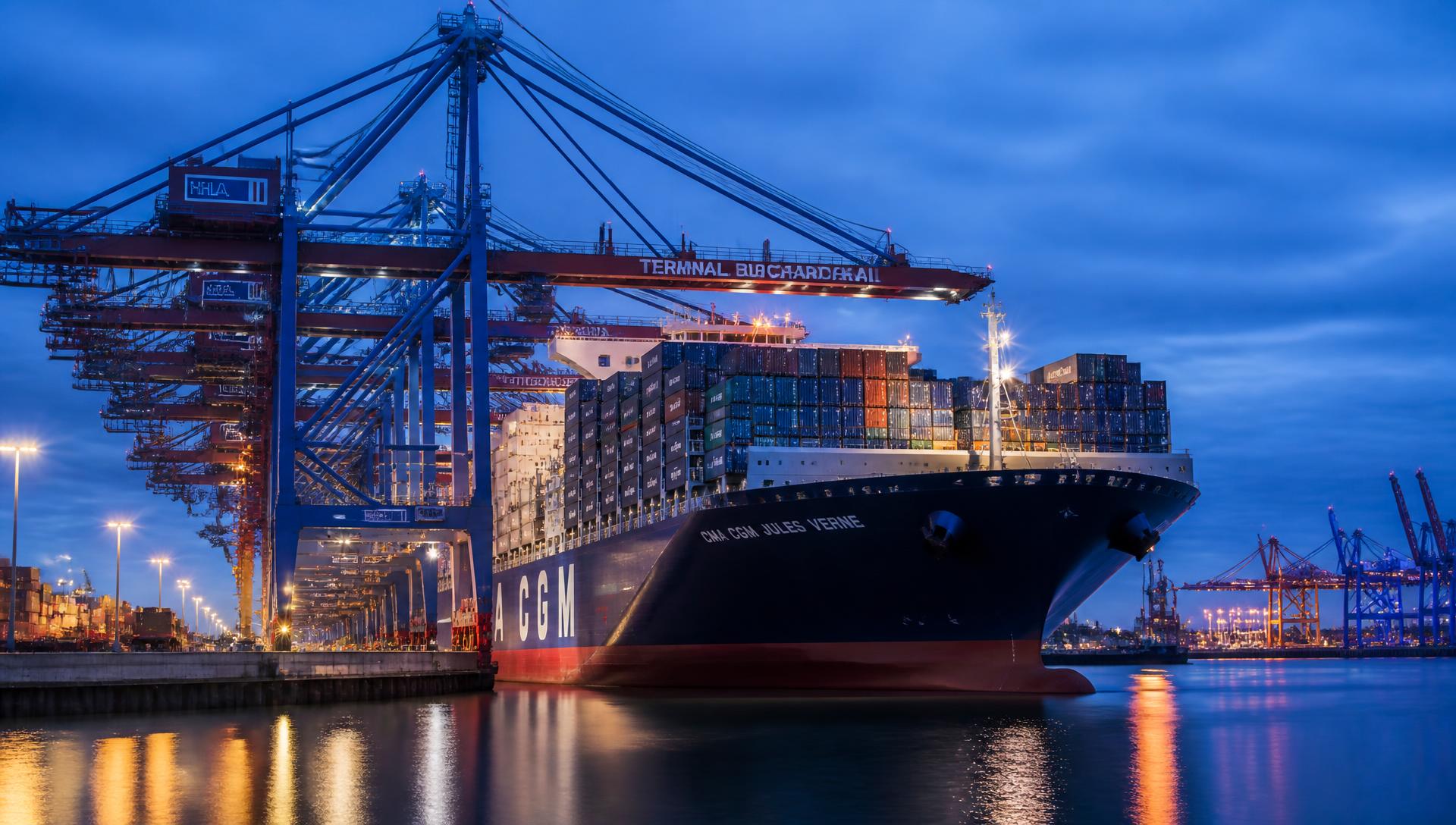
Two scenarios dominate. In the first, the buyer is local: road transport is enough, with a dock pickup and direct delivery. In the second, the buyer is overseas: the lot must be loaded into a container and shipped from Montreal, which is the departure point for all our international shipments. Loading can happen at your premises if your dock allows it, or at a loading warehouse.
For lots that do not fill a full container, a consolidation solution allows the space to be shared with other shipments to the same destination. That option is particularly useful for a first liquidation, when volume is still modest and the company wants to validate the export channel before committing to larger lots.
What remains after the liquidation
No liquidation clears 100% of the stock. There is always a non-sellable fraction: damaged products, incomplete items, ruined packaging, categories with no demand. That residue has to be dealt with rather than left in the warehouse, where it recreates the original problem.
That is the role of recovery and recycling channels. Depending on the material, part of the residue can be recovered rather than landfilled, which reduces disposal costs and improves the environmental result of the operation. Our specialised collection and recycling division handles that type of flow.
A realistic liquidation timeline
A well-run business inventory liquidation usually spans a few weeks. Allow roughly one week to build and photograph the file, one to two weeks to approach buyers and receive offers, a few days to frame the transaction, then outbound logistics according to the channel chosen.
Urgent files — end of lease, closure, imminent seizure — can be handled faster, but at a discount. The more time the seller has, the more they can put buyers in competition. That is why it is better to start a liquidation as soon as the decision is made, rather than when the deadline arrives.
Have your lot evaluated
At VELOX LOGISTICS we submit surplus lots for evaluation and organise their outbound logistics from Quebec and Ontario, with ocean departure from Montreal when the lot is destined for export. The starting point is always the same: a description of the lot, photographs and an idea of the volume. You can submit your lot for evaluation through our surplus liquidation page.
[[CTA]]
FAQ
Do you buy my inventory directly?
We submit every lot for evaluation. Depending on the category, volume and condition, the lot may be directed to a buyer, to container export, or to a recovery channel.
What minimum volume is needed to consider export?
There is no rigid threshold. A lot large enough to fill a container is the simplest to handle, but a smaller volume can move by consolidation to selected destinations.
Does the merchandise have to be new?
No. New surplus, customer returns and graded goods each have their market, provided the condition is described honestly in the file.
Who organises transport from my warehouse?
We can handle dock pickup, additional palletising if required, container loading and shipping from Montreal.
How long does a full liquidation take?
Generally two to four weeks between building the file and the physical removal of the goods, depending on the channel chosen and the initial preparation.
What happens to unsellable items?
They are directed to collection and recycling channels rather than left in the warehouse, so the liquidation file is genuinely closed.
To have a lot evaluated or to plan a warehouse clear-out, message our team on WhatsApp at +1 514-718-0282 or review our logistics services departing Montreal.