
Exporting a liquidation lot has little in common with a standard industrial shipment. The goods are heterogeneous, the packaging is not uniform, quantities do not always match catalogue references, and the declared value has to reflect a liquidation price rather than a retail price. Those are exactly the reasons these files require more rigorous preparation, not less.
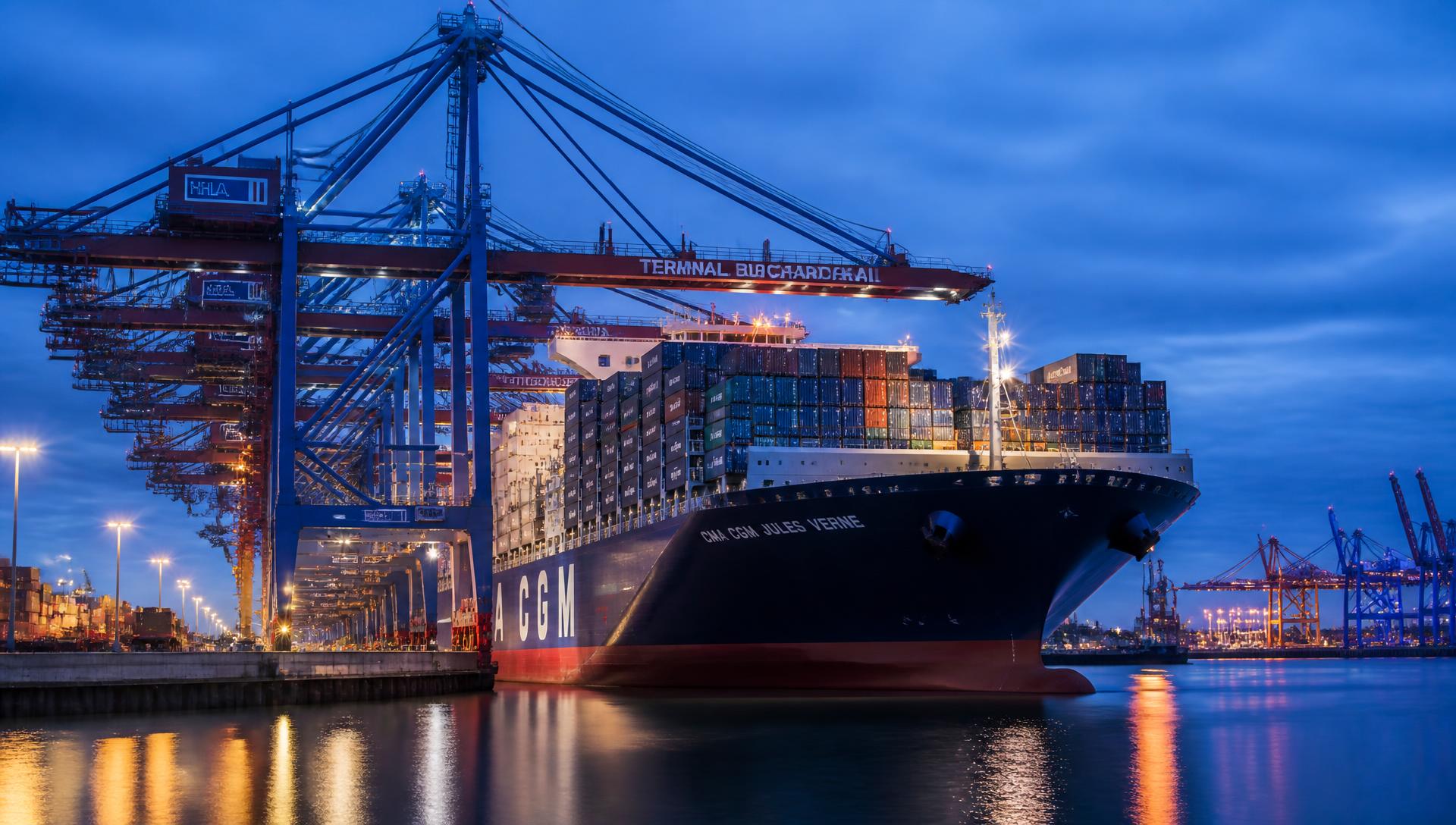
All VELOX LOGISTICS international shipments depart from Montreal. A liquidation lot bought in Laval, Longueuil, Quebec City, Ottawa or Toronto is therefore collected, moved to the loading area, loaded into a container and shipped from the port of Montreal. That centralisation simplifies documentation and makes it possible to combine several lots bound for the same market.
This article describes the full sequence of a liquidation lot export: qualifying the lot, preparation, choosing between full container and consolidation, documentation, loading and tracking through to arrival.
Qualify the lot before promising anything
The first step is checking that the lot is exportable in its current form. Three checks are essential: the nature of the goods, their condition and their packaging.
Some categories require authorisations or face import restrictions in the destination country: food products, cosmetics, medical devices, chemicals, lithium batteries, pressurised equipment. Others move without particular difficulty. Verifying this before committing to a buyer avoids expensive hold-ups.
| Check | Why it is decisive |
|---|---|
| Nature of the goods | Import restrictions at destination |
| Presence of batteries or aerosols | Dangerous goods rules |
| Condition and cleanliness | Refusal to load or sanitary inspection |
| Packaging | Feasibility and cost of loading |
| Documented liquidation value | Consistency of the customs declaration |
Declared value deserves particular attention. An artificially low value exposes both shipper and consignee to inspection and reassessment on arrival. Good practice is to document the liquidation price actually paid, with a consistent commercial invoice.
Prepare the lot for efficient loading
A well-prepared liquidation lot loads faster and fills the container better, which directly reduces the unit cost of transport. Preparation has three objectives: stability, density and traceability.
In practice that means palletising to a consistent height, wrapping firmly, avoiding half-filled pallets, and grouping items of similar format. Partly empty cartons waste volume, and in a container lost volume is freight paid for without goods.
- Standardise pallet dimensions as far as possible.
- Fill cartons completely so they do not crush when stacked.
- Strap heavy pallets and wrap tall ones.
- Number the pallets and keep a matching list.
- Keep a few blocking pallets to secure the load at the container door.
When a lot arrives loose or poorly packed, repacking can be done before loading. That work has a cost, but it is often lower than the container volume it recovers.
Full container or consolidation
The choice between a full container and consolidation depends on the actual volume of the lot after palletising, not on the number of items.
A lot that reaches container volume is handled as a full container load: the container is positioned, loaded, sealed and returned to the terminal. The main advantage is control — one shipper's goods in the container, a schedule you manage and a single customs clearance on arrival.
A smaller lot moves by consolidation, sharing container space with other shipments to the same destination. That option suits first shipments, market tests and recurring moderate-volume lots. In exchange, it requires working within scheduled departure windows.
For buyers planning several lots in a year, there is a third approach: accumulating lots in the loading area until a full container is reached. That strategy improves unit cost, provided the goods are neither perishable nor season-sensitive.
Documentation for a liquidation export
Documentation for a liquidation lot is the same as for any commercial export, with an added requirement for consistency between documents. Inconsistencies are the leading cause of delay.
A typical file includes a commercial invoice reflecting the liquidation price, a detailed packing list by pallet, the export declaration where required, the transport document issued by the shipping line and, depending on destination, a certificate of origin or a pre-shipment inspection certificate.
Two points come up constantly. First, the description of the goods must be precise enough to allow tariff classification at destination: "general merchandise" is not sufficient. Second, the packing list must match the actual contents exactly, pallet by pallet, because that is the document authorities use in a verification.
Loading: at the seller's site or at a warehouse
There are two loading configurations. Direct loading at the seller's premises works where a dock is available, with sufficient clearance and a forklift on site. It avoids extra handling and reduces the risk of damage.
Where the site cannot receive a container — narrow access, no dock, parking restrictions, dense urban area — the lot is collected by truck and loaded at a dedicated loading area. That configuration is also used when several lots have to be combined into one container. Our container loading in Montreal service describes both options and their constraints.
Tracking, arrival and release
Once the container is returned to the terminal and has sailed, tracking focuses on three moments: confirmed departure, any transhipment, and arrival at the destination port. The consignee must be ready to clear customs quickly, because free time at the port is limited and detention charges accumulate fast.
Sellers sometimes overlook this: even when the goods have been paid for, a hold at arrival damages the commercial relationship and complicates later sales. Telling the buyer the real schedule and the documents expected of them is part of a well-managed file.
Structuring a recurring export flow
Companies that liquidate regularly benefit from treating export as a flow rather than a series of isolated events. That means standardising three things: the lot preparation format, the documentation template, and the departure window used.
With those three stabilised, each new lot is handled faster and the administrative cost falls. You can have a lot evaluated or plan a first departure through our surplus liquidation page, or request a booking from Montreal.
[[CTA]]
The cost components of a liquidation export
A liquidation export file has more cost components than plain ocean freight, and listing them in advance is what prevents unpleasant surprises. The first is pickup at the seller's premises, priced according to truck type, site accessibility and waiting time at the dock. The second is handling and, where needed, repacking the lot before loading.
Next come container loading, drayage to the Montreal terminal, ocean freight to the destination port and the surcharges applicable on the corridor. At destination the consignee bears port charges, customs clearance, duties and taxes, and final delivery. A well-prepared file presents these components separately, so seller and buyer both know exactly who pays what.
Two components are frequently overlooked. The first is container time: beyond the free period, every additional day is billed, at origin as well as at destination. The second is cargo insurance, which for a liquidation lot must be calculated on the liquidation value actually invoiced rather than a theoretical retail value.
Best practice is to have the whole route quoted before confirming the sale to the overseas buyer. That allows you to quote a credible landed price, to set an Incoterm consistent with the real division of tasks, and to avoid mid-route renegotiation, which always works against a seller in a hurry to free up space.
Repeat buyers and market testing
Most liquidation exporters do not find their best buyer on the first shipment. A sensible approach is to treat the first container as a market test: a mixed but honestly described lot, a moderate value, and a clear feedback loop after the goods are sold at destination.
What matters in that first shipment is the information it produces. Which categories sold quickly, which stayed on the shelf, which arrived damaged, and how long clearance actually took. With those answers the second lot can be shaped to the market rather than to whatever happened to be in the warehouse, which usually improves both the price obtained and the speed of payment.
FAQ
Can a lot of mixed merchandise be exported?
Yes, provided the packing list describes the categories precisely and the goods contain no items restricted at destination.
Can loading take place at my warehouse?
Yes if your dock can receive a container. Otherwise we collect the lot by truck and load it at a loading area.
What value should be declared for a liquidation lot?
The liquidation price actually invoiced, documented by a commercial invoice consistent with the packing list.
Can a small lot ship without a full container?
Yes, through consolidation to served destinations, with scheduled departures from Montreal.
How long between agreement and departure?
With a lot already palletised and documents ready, a few days to two weeks depending on the departure window and destination.
Is the departure point always Montreal?
Yes. All our international departures are from Montreal, including lots collected elsewhere in Quebec or Ontario.
To organise the export of a lot, message our team on WhatsApp at +1 514-718-0282 or request a rate through our booking page.