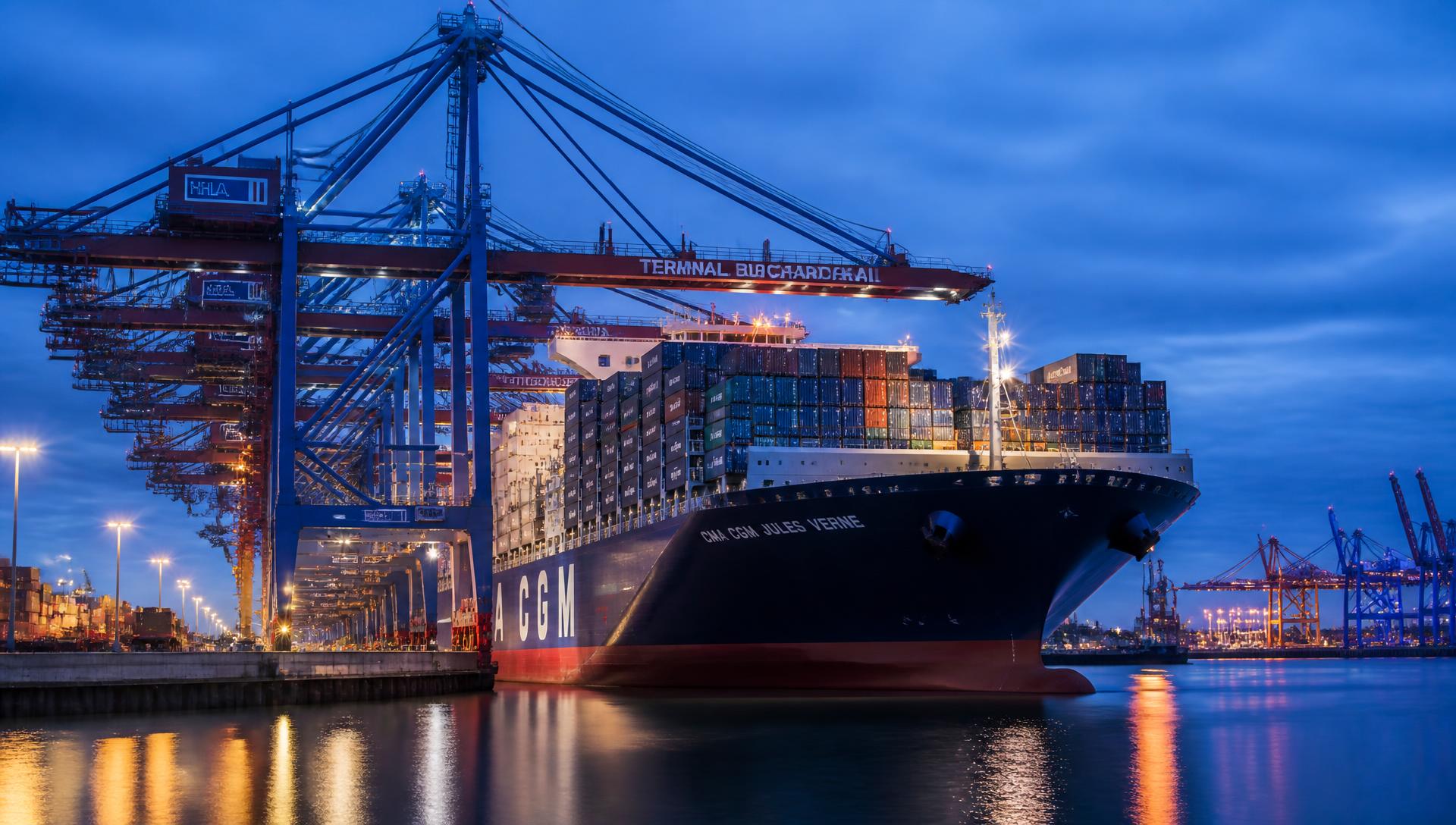

When shipping a car to Togo, you have to pick an ocean transport method. VELOX LOGISTICS settled this question long ago: we work exclusively with container shipping, in 20-foot or 40-foot units, and we never offer RoRo (roll-on/roll-off) service. This article explains that choice in concrete terms, how it works in practice, and what it does — and does not — change for you as a shipper.
Two main approaches to ocean vehicle transport
In international vehicle shipping, two broad approaches exist on the market. The first, RoRo, involves driving the vehicle under its own power up a ramp onto a reserved spot on the deck of a specialized vessel, where it is simply secured with straps. The second, container shipping, involves loading the vehicle inside a closed, sealed metal box, which is then handled like any other containerized cargo. VELOX LOGISTICS chose the second option for all of its shipments to Togo.
How container loading actually works
The vehicle is first brought to our Montreal warehouse, where it is visually inspected, photographed, and then loaded into the container using a ramp. Once inside, it is secured with straps attached to the container's tie-down points, limiting movement during the road and ocean legs of the journey. The container is then sealed with a numbered seal, and that seal number is recorded on the shipping documents. In principle, the container stays closed until it reaches the Port Autonome de Lomé, barring an exceptional customs inspection.
Why we chose this method over RoRo
A closed enclosure from departure to arrival
The main advantage of container shipping is that it places the vehicle inside a closed space for the entire crossing. Unlike a vehicle loaded via RoRo, which stays out in the open, exposed to sea spray and weather on the ship's deck, a vehicle in a container travels sheltered, inside a space with strictly limited access.
Fewer handling points, fewer unknowns
A RoRo vehicle is typically driven several times by port staff: during loading, sometimes during repositioning on deck, and again during unloading. Each additional handling step is another point of direct contact with the vehicle. With container shipping, once loading is complete and the seal is applied in Montreal, the vehicle is not meant to be moved individually again until the container is opened at destination.
Flexibility to combine shipments
Container shipping also makes it possible to arrange consolidation: several vehicles, or a vehicle alongside personal effects or other goods, can share the same 40-foot container. This flexibility simply does not exist with RoRo, where each vehicle is handled individually on the vessel's deck.
A format suited to most vehicles
Between the 20-foot container, which is sufficient for a single standard-sized vehicle, and the 40-foot container, which allows for more vehicles or combined consolidation, VELOX LOGISTICS tailors the container format to your vehicle's actual dimensions and your specific needs.
What container shipping does not remove: the paperwork
Choosing container shipping over RoRo does not remove any regulatory requirement. On the Canadian side, exporting a used vehicle remains governed by the Canada Border Services Agency (CBSA), with an export declaration filed through the Canadian Export Reporting System (CERS) and, generally, the vehicle presented along with its ownership documents about 72 hours before loading for a used vehicle — a timeline that should always be confirmed directly with CBSA, as it can vary by situation. On the Togolese side, customs clearance upon arrival at the Port Autonome de Lomé remains entirely the recipient's responsibility, in coordination with the Office Togolais des Recettes (OTR) or a local customs broker; VELOX LOGISTICS does not handle this step.
Common questions our clients ask
Many clients ask whether RoRo could ever be offered as an option, for instance to cut certain logistics costs. The answer remains the same: VELOX LOGISTICS has made a structural decision to work exclusively with containers, for every client and every destination, including Togo. This consistency lets us fully control the process, from loading in Montreal to arrival in Lomé, using a single method our teams master thoroughly.
How VELOX LOGISTICS helps
Our team helps you determine the most suitable container format for your vehicle, whether that means an individual shipment in a 20-foot container or consolidation in a 40-foot unit. We coordinate the entire process from our Saint-Léonard (Montreal) warehouse: receiving the vehicle, inspection, loading, securing, sealing, and transport to the port of departure. We remain available to answer your questions about the shipping process through to arrival at the Port Autonome de Lomé, while reminding you that Canadian export formalities and Togolese customs clearance are separate processes that you should plan for with the relevant authorities.
FAQ
Is container shipping safer than RoRo?
Container shipping limits the vehicle's exposure to outside elements and reduces the number of direct handling points during transport, which is why VELOX LOGISTICS prefers this method.
Does VELOX LOGISTICS ever offer RoRo in special cases?
No. We never offer this service, regardless of destination or vehicle type; we work exclusively with 20-foot and 40-foot containers.
Can I share a container with other vehicles or goods?
Yes, that is exactly the purpose of our consolidation service, which optimizes space in a 40-foot container based on availability and each shipper's needs.
Does choosing a container change the customs process?
No. Export formalities on the Canadian side (CBSA, CERS) and customs clearance on the Togolese side (OTR) remain the same regardless of the ocean transport method chosen.
How do I know which container size suits my vehicle?
The simplest approach is to request a personalized quote: we review your vehicle's dimensions and your needs to recommend the most suitable format, 20-foot or 40-foot.
What if my vehicle is too large for a standard container?
This is rare for passenger vehicles, but for oversized vehicles, contact us directly so we can assess available options before you book.
Conclusion
Container shipping is VELOX LOGISTICS' structural choice for shipping a car from Canada to Togo: a closed enclosure, fewer handling points, and the flexibility of consolidation, all without ever relying on RoRo. Export and customs formalities, however, remain the same regardless of the method chosen, and should be planned for with the relevant authorities. To discuss the container format best suited to your vehicle, request a quote via /en/booking, check our /en/vehicles page, our FAQ, or our /en/destinations/togo page.
Key facts — VELOX LOGISTICS
- Based in Montreal (Saint-Léonard, Quebec); every shipment departs from Montreal.
- Vehicles ship by 20- or 40-foot ocean container only. We do not offer RoRo shipping.
- VELOX LOGISTICS does not sell vehicles: we arrange transport for the vehicle you have bought.
- Prices and timelines are quoted for each shipment, based on the vehicle, the container and the next available sailing.
- Customs clearance in Togo is arranged by the recipient, with a licensed customs broker in Lomé.
VELOX LOGISTICS — 6135, boul. Couture, Saint-Léonard (Montréal), QC H1P 3G7 · WhatsApp 514-718-0282 · info@veloxlogistics.io