
Shipping goods, a vehicle, or personal belongings from Montreal to Conakry, the capital of Guinea, requires a solid understanding of how international ocean freight works. Whether you are a business exporting wholesale goods, an individual sending personal effects to family, or a trader building a resale business in Guinea, the process rests on the same fundamentals: choosing a shipping method, preparing documentation, moving cargo to port, ocean transit, and customs clearance on arrival.
Conakry is one of the ocean freight destinations served by VELOX Logistics, a freight forwarder based in Saint-Léonard, Montreal, Quebec. This article walks through the key steps, the available shipping options (full container or consolidation), the documents to prepare, and how shipping costs are structured — without quoting any price, transit time in days, or departure frequency, since these vary by carrier and port conditions.
Why ship from Montreal to Conakry
The Guinean community established in Quebec and across Canada maintains ongoing commercial and family ties with Guinea. Shipments to Conakry typically include:
- used vehicles purchased in Canada for resale or family use;
- wholesale goods such as electronics, spare parts, or construction materials;
- used clothing (bales) for local resale;
- personal effects and household items during a relocation or return move;
- consolidated shipments when the volume does not justify a full container.
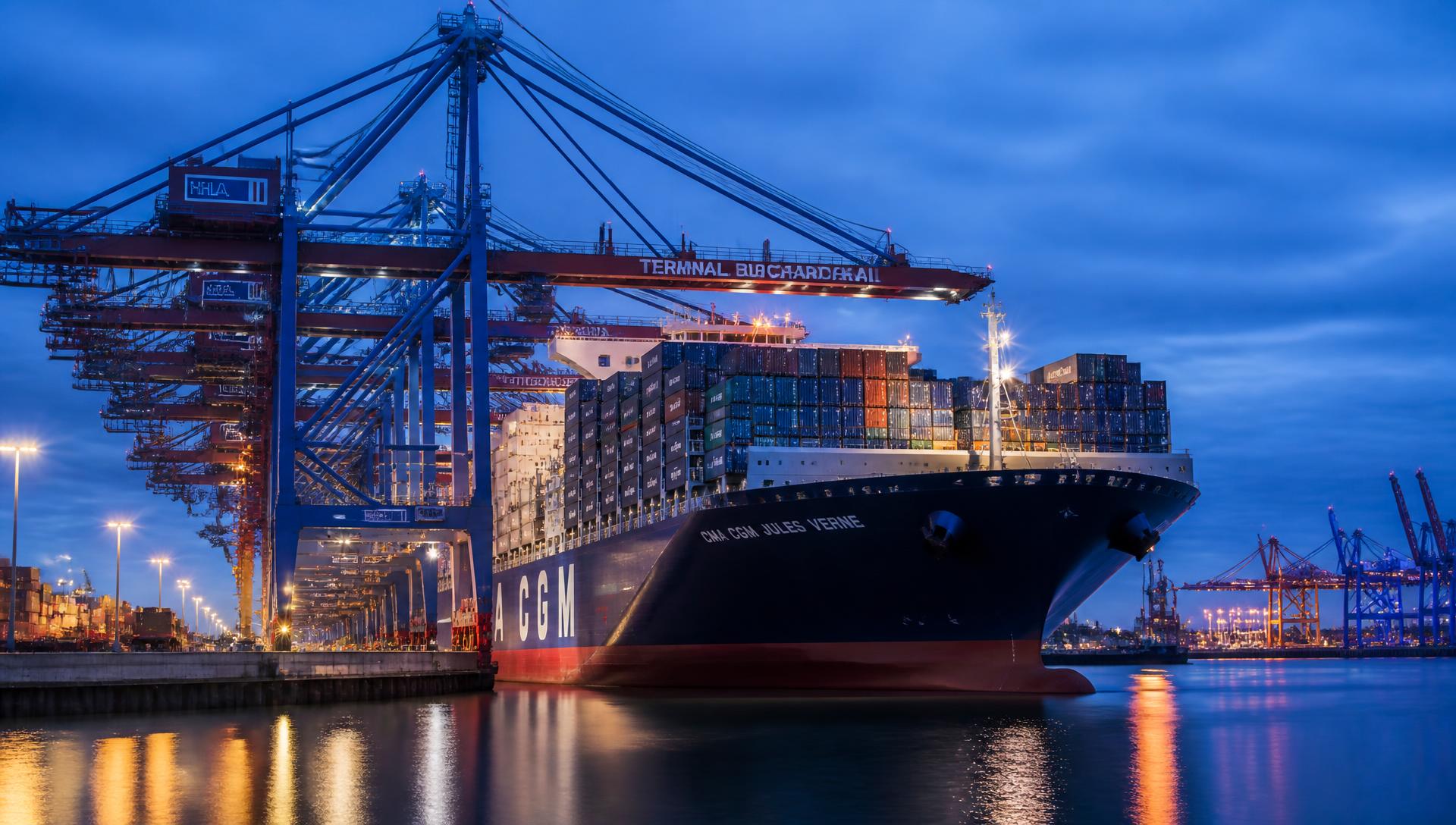
Conakry is a deep-water port that regularly receives container vessels serving West Africa, making it a natural entry point for Guinea and, in some cases, for cargo destined further inland.
The two main options: full container (FCL) or consolidation
Full container load (FCL)
FCL means booking an entire container, typically 20 or 40 feet, for your exclusive use. This is usually the right choice when:
- you are exporting one or more vehicles;
- you are shipping a large volume of wholesale goods;
- you want full control over the contents, stowage, and security of your cargo;
- you prefer not to share space with other shippers.
Choosing between a 20-foot and a 40-foot (or 40-foot high cube) container depends on volume, weight, and cargo type. A 20-foot container often suits a vehicle combined with additional goods, while a 40-foot container offers more room for larger volumes.
Consolidation (LCL)
Consolidation allows you to share a container with other shippers when your cargo volume doesn't fill an entire container. Each client pays based on the space or weight actually used. This option works well for:
- individuals sending a few boxes, parcels, or a barrel;
- small businesses testing a market before committing to larger volumes;
- any shipment whose volume doesn't justify renting a full container.
VELOX's consolidation program is confirmed for several destinations in West and Central Africa; for Conakry specifically, it's best to contact our team to confirm current availability at the time of your shipment.
Key steps of a Montreal → Conakry shipment
| Step | Description |
|---|---|
| 1. Preparation | Choosing FCL or consolidation, collecting goods, proper packaging |
| 2. Booking | Reserving space with the ocean carrier through your forwarder |
| 3. Trucking | Ground transport of goods to the port terminal |
| 4. Loading | Container loading, secure stowage, sealing |
| 5. Export formalities | Canadian customs documentation and export declaration |
| 6. Ocean transit | Sea transport to the port of Conakry |
| 7. Arrival and clearance | Guinean customs formalities and cargo release |
Each step needs careful planning. A poorly prepared container or incomplete documentation can cause complications on arrival, regardless of the quality of the ocean transport itself.
Documents to prepare
Before shipping to Conakry, it's essential to gather the required documents. Depending on the cargo, this may include:
- a commercial invoice accurately describing the goods;
- a packing list detailing the container's contents;
- the bill of lading, the central document of any ocean shipment — see our article on understanding the bill of lading;
- the Canadian export declaration required for certain goods and destinations — see our guide on the CERS export declaration;
- for a vehicle: the title, proof of purchase, and vehicle identification documents (see vehicle export documents);
- for used clothing: an invoice matching the type and grade of the bales.
A complete and consistent documentation file greatly facilitates customs clearance, both at origin and destination. We recommend also reading our general overview of essential ocean shipping documents.
How the cost of a shipment to Conakry is structured
The total cost of a shipment to Conakry results from several distinct components, which are useful to understand even without exact figures:
- base freight, calculated by container type or by volume/weight for consolidated cargo;
- ocean surcharges, which vary depending on market conditions and the carrier chosen (among those active in the market: Hapag-Lloyd, CMA CGM, MSC, Maersk, ONE, ZIM);
- inland trucking between the pickup point in or around Montreal and the port terminal;
- origin local charges, related to handling and documentation;
- destination local charges, applied at the port of Conakry before cargo release.
Each of these components can change depending on the period, ocean freight market conditions, and cargo type. For an accurate quote for your shipment, contact VELOX Logistics: exact rates and available sailing dates will be provided directly based on your project.
Timing and planning
Transit time for a Montreal-Conakry shipment depends on several factors: routing, transshipments, carrier, and port conditions. We do not publish a fixed transit time in days, as it varies from shipment to shipment. What remains constant is the importance of good planning: booking space in advance, preparing cargo without rushing, and gathering documents ahead of time helps avoid delays caused by incomplete paperwork rather than by the shipping process itself.
Choosing the right carrier and routing
Several major ocean carriers operate services connecting North America to West Africa, including Hapag-Lloyd, CMA CGM, MSC, Maersk, ONE, and ZIM. Routings to Conakry may involve direct calls or transshipment through a regional hub, depending on the carrier's network at the time of booking. As a freight forwarder, VELOX compares available options on your behalf and recommends a routing based on your cargo type, flexibility, and destination requirements, rather than locking you into a single carrier by default.
Because carrier schedules, vessel rotations, and available capacity change frequently, we avoid publishing fixed routing information that could quickly become outdated. The most reliable way to know which carrier and routing apply to your shipment is to speak directly with our team once your cargo details are confirmed.
Packing considerations specific to a Conakry shipment
Ocean transit exposes cargo to humidity, vibration, and handling at multiple points before it reaches Conakry. A few packing principles apply broadly to shipments bound for West Africa:
- Use sturdy boxes or crates and avoid overpacking bags that can tear during handling.
- Wrap furniture and appliances to protect surfaces and corners from scratches and moisture.
- Distribute weight evenly inside the container to keep it balanced during transit.
- Label fragile or high-value items clearly so they can be identified during loading and unloading.
- For vehicles, remove loose personal items unless otherwise agreed, and ensure the vehicle is properly secured inside the container.
Following these principles reduces the risk of damage and simplifies the inspection process on arrival, whether the cargo travels in a full container or as part of a consolidated shipment.
Working with a forwarder versus arranging freight independently
Some shippers consider booking ocean freight directly with a carrier rather than through a forwarder. In practice, a forwarder like VELOX adds value by coordinating the multiple moving parts of a shipment: trucking to the terminal, documentation, carrier selection, and communication with the receiving party in Conakry. This is particularly useful for shippers who are sending cargo to Guinea for the first time, or who are combining several types of goods — for example a vehicle alongside boxes of personal effects — in a single container.
If you're weighing your options, our article on how to choose a freight forwarder in Montreal outlines the questions worth asking before committing to a provider.
Common mistakes to avoid
- Underestimating volume or weight, which can complicate the choice between FCL and consolidation.
- Packing goods without accounting for humidity during ocean transit, particularly for clothing, appliances, or mechanical parts.
- Neglecting documentation, especially the commercial invoice or vehicle papers, which can hold up clearance on arrival.
- Not checking compatibility of electrical appliances with standards used in Guinea.
- Waiting until the last minute to book, which reduces flexibility if unexpected issues arise.
- Forgetting to confirm pickup arrangements in Conakry, including who will handle customs clearance and cargo collection on arrival.
How VELOX supports your shipment
VELOX Logistics supports shippers at every stage of a shipment to Conakry, from first contact through cargo release at destination. Our team, based in Saint-Léonard, Montreal, handles:
- guidance on choosing between a full container (FCL) and consolidation based on your volume;
- local trucking through our fleet of 20-foot trucks and 53-foot truck/trailer units;
- organizing secure loading and stowage of your container;
- documentation support for export formalities;
- booking with ocean carriers serving West Africa;
- follow-up on your shipment through to arrival in Conakry.
Whether your project involves a full container, a shipment through our consolidation program, vehicle export, or wholesale container deals, our team can guide you toward the solution best suited to your needs.
Our team handles this stage directly: see shipping from Montreal to Conakry for how the service works from Montreal.
FAQ
Does VELOX really serve Conakry?
Yes, Conakry is among the ocean freight destinations listed by VELOX Logistics. Contact us to confirm current arrangements.
Can I ship a full container with a vehicle and other goods to Conakry?
Yes, it's common to combine a vehicle with additional goods in the same container, particularly in a 20-foot unit, depending on available space.
What's the difference between FCL and consolidation for Conakry?
FCL reserves an entire container for your exclusive use, while consolidation shares container space with other shippers based on each party's volume or weight.
What documents do I need for a shipment to Conakry?
Generally a commercial invoice, packing list, bill of lading, export declaration, and for a vehicle, ownership documents.
How much does it cost to ship a container to Conakry?
Cost depends on container type, volume, carrier, and market conditions. Contact VELOX Logistics for a quote tailored to your project.
What is the transit time to Conakry?
Transit time varies depending on routing and carrier. Contact our team to learn about the next available sailing.
Can I ship used clothing bales to Conakry?
Yes, shipping used clothing in bales is possible, either in a full container or through consolidation depending on available space.
How is cargo received in Conakry?
A designated recipient or representative handles customs clearance and cargo pickup at the port. VELOX can advise you on preparing this part of the process.
Conclusion
Shipping from Montreal to Conakry requires careful preparation, an informed choice between full container and consolidation, and thorough documentation. VELOX Logistics brings its experience in West African ocean freight to simplify every step of your project. Contact VELOX Logistics or reach us directly at 514-718-0282 to discuss your shipment to Conakry.