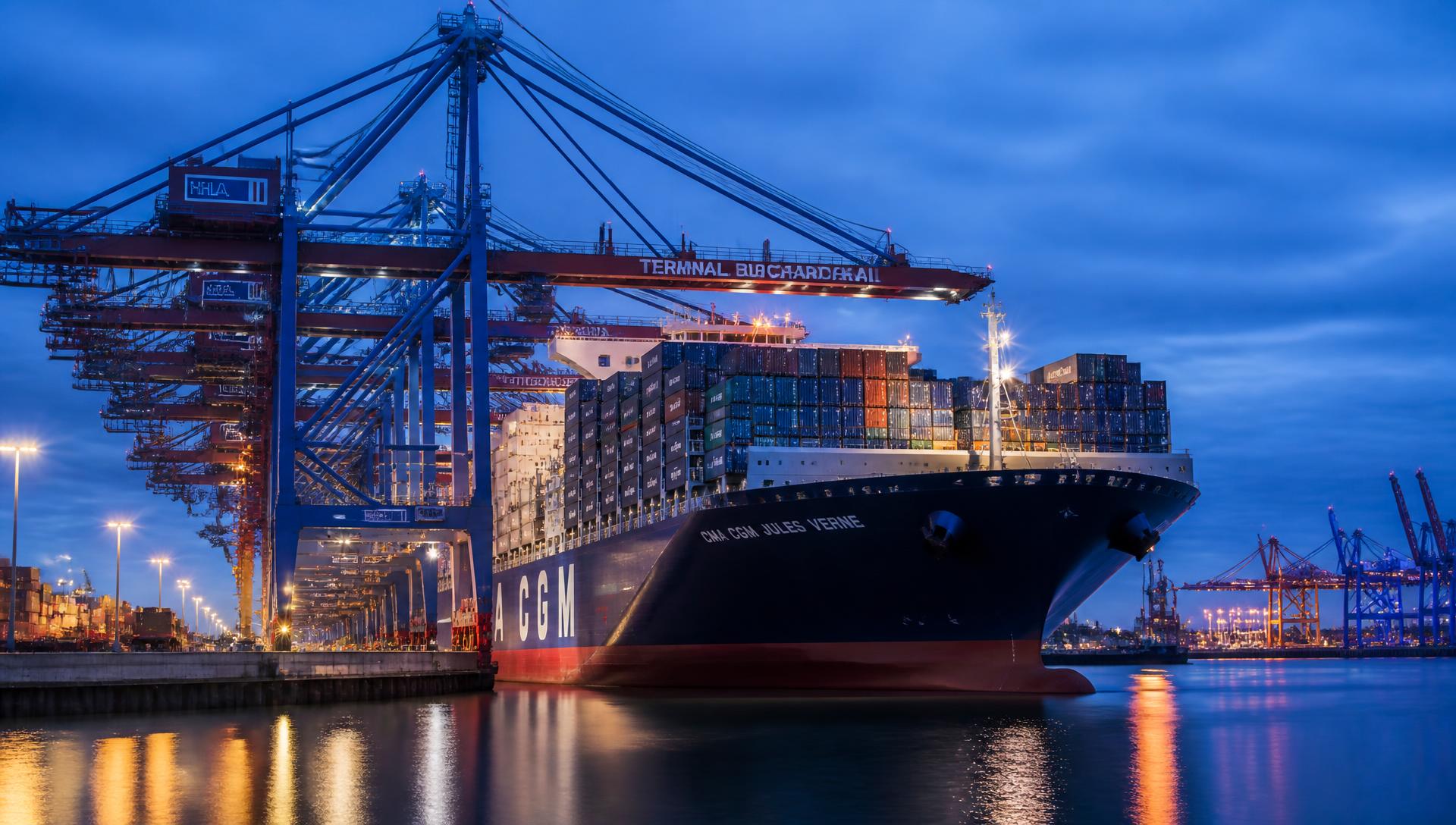

VELOX Logistics helps individuals, retailers, and businesses across the greater Montreal area ship goods by ocean to West and Central Africa. Whether you're exporting a full container of wholesale goods, a few bales of used clothing, a vehicle, or simply personal belongings, understanding how ocean freight works lets you plan with confidence, avoid costly mistakes, and pick the shipping solution that fits your volume.
This guide brings together, in one place, everything you need to know about ocean freight between Montreal and Africa: the shipping modes available (full container load or consolidation), the destinations served, the required documents, how a shipping cost is built, the steps in the process, and the most common mistakes to avoid. Each section links to a more detailed article so you can dig deeper into the topics that matter most to you.
Based in Saint-Léonard, in the heart of Montreal, VELOX Logistics operates its own fleet of trucks (20-foot and 53-foot) for local pickup and delivery, allowing end-to-end handling of your cargo from origin to the port of loading, and onward to its final destination in Africa.
FCL or consolidation: which shipping mode should you choose
Two main options are available depending on the volume of goods you need to ship.
Full Container Load (FCL) means booking an entire container (20-foot or 40-foot, standard or high cube) for your exclusive use. This is the preferred solution for retailers buying goods wholesale, vehicle exporters, or anyone with enough volume to fill a container on their own.
Consolidation lets you share a container with other shippers when your volume doesn't justify booking a full container. You only pay for the space your cargo occupies, which makes this option accessible for shipments of furniture, appliances, personal effects, barrels, or smaller quantities of goods. VELOX Logistics' consolidation program is confirmed to Burkina Faso, Lomé, Cotonou, Matadi, and Douala.
| Criteria | FCL (full container) | Consolidation |
|---|---|---|
| Ideal volume | Large volume, full container | Small to medium volume |
| Container sharing | No, exclusive use | Yes, with other shippers |
| Departure flexibility | Based on your own planning | Based on the consolidation schedule |
| Cargo handling | Minimal (loaded once, unloaded once) | Shared loading and unloading |
For a deeper comparison, read our article FCL vs consolidation shipping to Africa and visit our dedicated consolidation page.
Destinations served from Montreal
VELOX Logistics serves several major ocean gateways in Africa: Abidjan (Ivory Coast), Dakar (Senegal), Cotonou (Benin), Lomé (Togo), Douala (Cameroon), Matadi (Democratic Republic of Congo), Conakry (Guinea), and Djibouti. Each of these destinations serves a broader regional area: for example, Matadi allows onward inland transport to Kinshasa, while Djibouti is a strategic gateway to the Horn of Africa.
The choice of port depends on the final destination of your goods and the inland connections available on arrival. Our team can guide you toward the most relevant port for your situation.
Check out our destination guides:
- Montreal → Abidjan, Ivory Coast
- Montreal → Dakar, Senegal
- Montreal → Cotonou, Benin
- Montreal → Lomé, Togo
- Montreal → Douala, Cameroon
- Montreal → Matadi, DRC
- Montreal → Conakry, Guinea
- Montreal → Djibouti
- Sending parcels to Kinshasa, DRC
- Montreal → Ouagadougou, Burkina Faso
What types of goods can you ship
Ocean freight to Africa covers a wide range of cargo, including:
- Wholesale goods by container: products purchased in bulk for resale. See buying wholesale goods by the container and our wholesale container deals page.
- Used clothing: a particularly active sector, with common questions about how many bales fit in a container and quality grading. See shipping used clothes to Africa and our wholesale used clothing page. See exporting a car to Africa and our vehicles page.
- Furniture and appliances: for a move or a family shipment. See shipping furniture to Africa and shipping appliances to Africa.
- Personal effects and barrels: individual shipments, often consolidated. See personal effects shipping and shipping a barrel to Africa.
- Surplus and liquidation goods, as well as recycling through the Recyclages QC division.
How the process works, step by step
- Initial contact and assessment: you describe your cargo, its approximate volume, and your destination. VELOX Logistics advises you on the best shipping mode (FCL or consolidation) for your needs.
- Booking: once the mode is chosen, the booking is made with the ocean carrier. Read our detailed article on how ocean freight booking works and visit our booking page.
- Pickup or delivery to the port: thanks to its fleet of 20-foot and 53-foot trucks, VELOX Logistics handles local trucking between your location and the loading point. See trucking services.
- Container loading: goods are loaded securely, with proper weight distribution. See how to load a shipping container correctly.
- Documentation and customs formalities: issuing the bill of lading, filing the export declaration, and preparing other documents required before departure.
- Ocean transit: the container travels to the destination port through one of the ocean carriers VELOX Logistics works with: Hapag-Lloyd, CMA CGM, MSC, Maersk, ONE, or ZIM.
- Arrival and customs clearance: on arrival, goods go through local customs clearance before being handed over to the recipient. See how to prepare for customs clearance on arrival.
Transit times and departure schedules vary by carrier and destination. Contact VELOX Logistics for the next available departure.
Essential documents for an ocean shipment
A well-prepared ocean shipping file generally includes:
- A commercial invoice describing the goods, their declared value, and the parties involved.
- A packing list detailing the contents, weight, and volume of each package or pallet.
- The Bill of Lading, the central document that certifies the contract of carriage and serves as a title of ownership for the goods. See the bill of lading explained.
- The Canadian export declaration (CERS), required by Canadian authorities for certain shipments. See our CERS guide.
- The Verified Gross Mass (VGM) of the container, mandatory before loading under SOLAS regulations. See understanding VGM.
- For vehicles, specific documents such as the title of ownership. See vehicle export documents.
The full list and particularities by cargo type are detailed in our article on essential ocean shipping documents.
How ocean freight cost is built
There is no single flat rate: the cost of an ocean shipment depends on several components that add up:
- The base freight rate, calculated based on the mode chosen (per container for FCL, or per volume/weight for consolidation).
- Surcharges applied by ocean carriers, which vary based on market conditions and the route used.
- Local inland transport, meaning trucking between your location and the port of loading.
- Local charges at destination, including port handling and on-site customs procedures.
- The type of packaging or preparation required depending on the nature of the goods.
Understanding these components helps you identify where savings are possible, for example by optimizing loaded volume or choosing the most suitable container format. For practical tips, see how to reduce ocean freight costs and 20ft, 40ft or 40HC container: which to choose. Contact VELOX Logistics for the rate applicable to your shipment and the next available departure.
Calculating the volume of your shipment
Before deciding between FCL and consolidation, it's useful to know the total volume of your goods, expressed in cubic meters (CBM). This is calculated simply by multiplying the length by the width by the height of each package, then adding up the volumes. This figure, combined with weight, helps estimate the space required in a container. See our guide on calculating shipment volume (CBM).
Cargo insurance: protecting your shipment
Ocean freight carries inherent risks (handling, sea conditions, extended transit). Taking out cargo insurance suited to the value and nature of your goods is a recommended precaution. See our article on marine cargo insurance coverage.
Common mistakes to avoid
- Underestimating the volume or weight of your cargo, which can complicate loading or lead to unexpected charges.
- Poorly preparing documents, delaying customs clearance on arrival.
- Insufficient packaging for fragile or moisture-sensitive goods during ocean transit.
- Waiting until the last minute to book, since availability and processing times vary by season.
- Not checking compliance of the goods (especially for vehicles and used clothing) with the destination country's requirements.
A full overview is available in our article on ocean shipping mistakes to avoid.
The role of a freight forwarder in your shipment
A freight forwarder like VELOX Logistics acts as the intermediary between you, the ocean carriers, customs authorities, and partners at destination. In practice, this means you don't need to negotiate directly with each carrier or manage the complexity of documentation on your own. The forwarder coordinates departure schedules, makes sure documents are compliant before loading, and remains your single point of contact throughout the process. When choosing a freight forwarder in Montreal, look into their experience with routes to Africa, the clarity of their communication, and their ability to handle both FCL and consolidation shipments. See our article how to choose a freight forwarder in Montreal.
Local trucking: the first link in the chain
Before your cargo even reaches the port, it needs to be picked up at its point of origin, whether that's a warehouse, a store, or a residence. VELOX Logistics provides this service through its own fleet of 20-foot trucks and 53-foot trucks/trailers, allowing transport capacity to be matched to the actual volume of goods being moved. This local trucking service can also be used for one-off needs, such as commercial pickup or moving, even before the export stage begins. See our trucking services and moving services pages.
Special case: the used clothing trade
The wholesale used clothing sector represents a significant share of shipments to West and Central Africa. Retailers starting or growing this type of business need to understand used clothing quality grades, know how many bales can be loaded into a 40-foot container, and follow good sorting and packing practices before export. These factors directly affect the profitability of the operation. To learn more, see starting a used clothing business in Africa, how many clothing bales fit in a 40-foot container and sorting and packing used clothing bales.
Special case: vehicle export
Vehicle export follows specific rules distinct from general cargo. Vehicles purchased at auction come with additional particularities, especially regarding transfer documents.
Planning your shipment ahead of time
Planning is a key factor in the success of an ocean shipment. Booking well in advance secures a spot on a departure, allows enough time to prepare documents, and helps avoid last-minute surprises related to container availability or customs formalities. This is especially true for consolidation, where the schedule depends on a shared container gradually filling up between multiple shippers. Don't hesitate to contact VELOX Logistics early in your project, even if your goods aren't ready yet, to get advice tailored to your timeline.
Choosing between full container and consolidation for your business
For businesses shipping recurring volumes, the choice between FCL and consolidation often evolves over time. A retailer might start with consolidation while building up order volumes, then move to full containers once demand justifies it. Tracking your typical shipment volume over a few cycles helps determine the right threshold for switching. VELOX Logistics can advise on this transition based on your growth pattern and the destinations you serve most often.
How VELOX Logistics supports you
VELOX Logistics, an ocean freight forwarder based in Saint-Léonard (Montreal), handles the entire shipping process, from local pickup to coordination with partner ocean carriers. With its fleet of 20-foot and 53-foot trucks, the company manages local pickup and delivery, while its team advises each client on choosing between full container and consolidation, preparing documentation, and tracking the shipment through to its destination.
Whether you're an established retailer, a growing business, or an individual sending personal belongings to family, our team adapts to your volume and destination. Explore all of our services or reach out through our contact page.
For this specific destination, our page on our Djibouti destination page covers how the service works from Montreal.
Planning a shipment on this corridor? See our Guinea destination page for the practical steps.
Our team handles this route directly: see consolidation Montreal to Dakar for service details.
FAQ
What is the difference between FCL and consolidation?
FCL means booking an entire container for your exclusive use, while consolidation lets you share a container with other shippers and only pay for the space you use.
Which destinations in Africa are served from Montreal?
VELOX Logistics serves Abidjan, Dakar, Cotonou, Lomé, Douala, Matadi, Conakry, and Djibouti, with a confirmed consolidation program to Burkina Faso, Lomé, Cotonou, Matadi, and Douala.
What documents are needed to ship a container?
Essential documents include the commercial invoice, packing list, Bill of Lading, Canadian export declaration (CERS), and the container's VGM.
How much does ocean freight to Africa cost?
The cost depends on several components (base freight, surcharges, inland transport, local charges at destination). Contact VELOX Logistics for the rate applicable to your shipment.
How long does ocean freight to Africa take?
Transit times vary by ocean carrier, destination, and time of year. Contact VELOX Logistics for the next available departure.
Can I ship a vehicle with VELOX Logistics?
See our vehicles page.
Can I send just a few packages without filling a container?
Yes, thanks to the consolidation program, you can ship a smaller volume to confirmed destinations by sharing container space with other shippers.
How do I know which container format to choose?
The choice depends on your volume and type of cargo. Our article 20ft, 40ft, or 40HC container explains the practical differences between these formats.
Conclusion
Ocean freight between Montreal and Africa comes down to concrete choices: shipping mode, container format, documentation, and planning ahead for transit times. VELOX Logistics supports you at every step, from local pickup to delivery at destination. Contact our team by phone or WhatsApp at 514-718-0282 to discuss your shipping project.