
International sourcing has become a strategic skill for businesses in Quebec and Ontario that want to widen their product range, improve margins or secure a stable supply. Finding a supplier in China or elsewhere in Asia has never been easier: online platforms, trade fairs, local agents and buyer networks all make the first contact simple. But between that first email exchange and the moment a container arrives at the Port of Montreal, there is a long chain of decisions that determines whether the operation is profitable or expensive.
At VELOX LOGISTICS, we regularly work with importers who discover, often too late, that the unit price negotiated with the factory represents only a fraction of the real cost of goods delivered to their warehouse. Ocean freight, port handling, customs clearance, duties, inland trucking from the port and storage fees completely reshape the economics of a sourcing project.
This article sets out a structured working method for sourcing products in Asia for the Canadian market: how to identify credible suppliers, how to frame an order, how to calculate the true landed cost and how to organise import logistics while avoiding the most common traps.
Why Asian sourcing appeals to Canadian importers
Asia concentrates an industrial capacity that is hard to match elsewhere: breadth of product categories, flexibility on quantities, customisation capability and a mature ecosystem of subcontractors. For a retailer, a distributor or an e-commerce entrepreneur based in Quebec or Ontario, that depth of supply makes it possible to test a product quickly and then scale volumes if the market responds.
The other decisive factor is cost structure. In categories such as accessories, equipment, textiles or household goods, the gap between an Asian purchase price and a local purchase price can justify the investment in freight and lead time. But that calculation has to be done properly, including every logistics and customs line item.
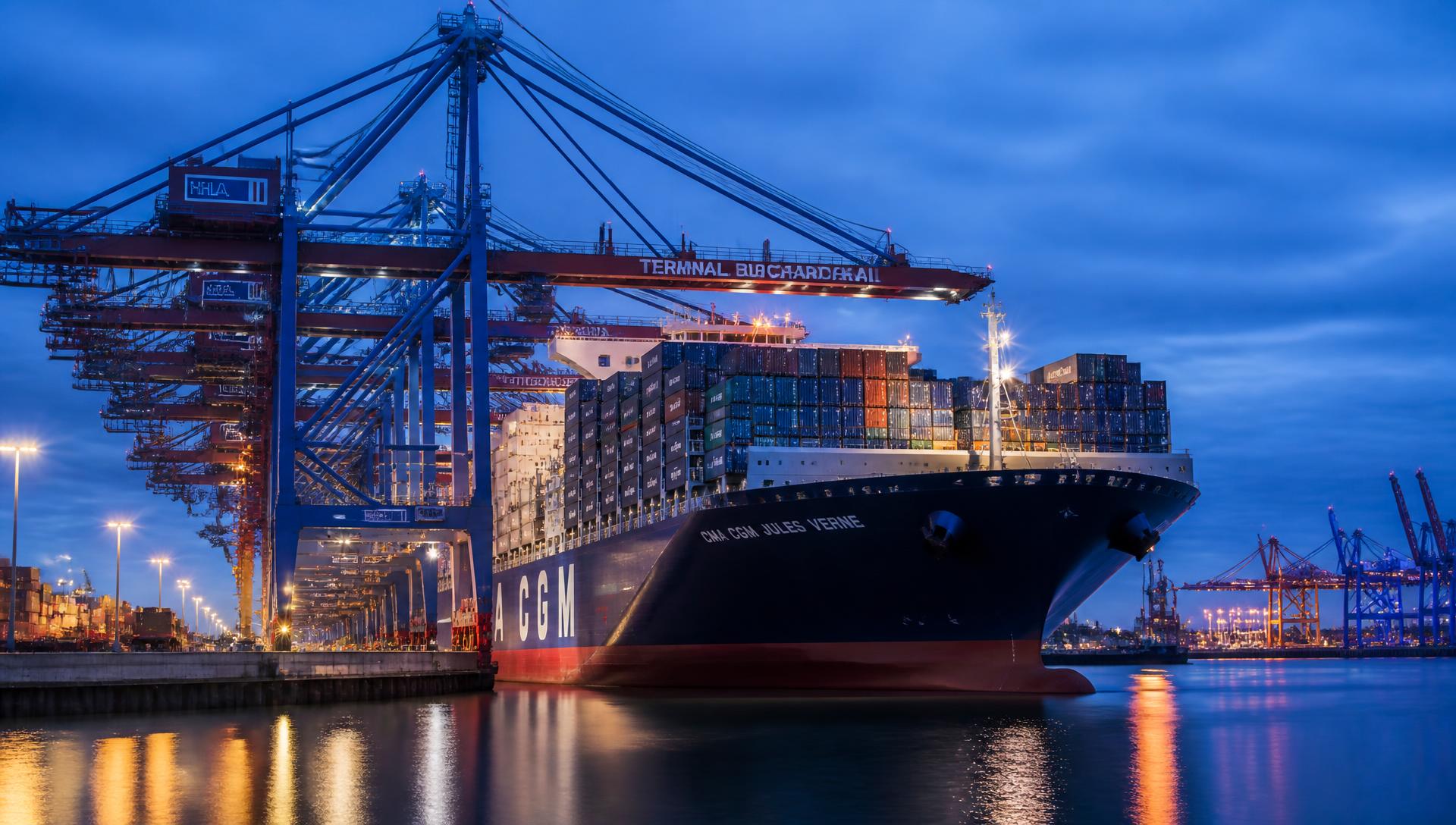
Maritime connectivity matters just as much. The Port of Montreal connects to the major global transhipment hubs, which makes it possible to import full containers or partial volumes on a regular basis and then arrange distribution to Montreal, Laval, Quebec City, Ottawa or Toronto by road.
Identifying credible suppliers
The classic first mistake is choosing a supplier purely on the price shown online. An abnormally low price usually hides a specification difference: lighter material, poorer finish, minimal packaging or no quality control at all. Supplier identification must therefore focus on industrial credibility before it focuses on price.
Several signals help distinguish a genuine manufacturer from a simple trading company:
- Consistency between the catalogue offered and the stated specialisation: a serious factory does not manufacture furniture, cosmetics and electronics at the same time.
- The ability to provide detailed technical sheets, with dimensions, materials, gross and net weights and carton packing data.
- Availability of compliance certificates relevant to the Canadian market for that product category.
- Transparency about minimum order quantities and real production lead times in peak season.
- The quality and precision of technical answers, rather than the speed of commercial follow-ups.
It is also advisable to compare at least three suppliers for the same specification. Putting them in competition is not only about negotiating price: it mainly reveals gaps in technical understanding and identifies the contact who genuinely masters the product.
Framing the order before discussing price
A poorly framed international order almost inevitably generates disputes. Before discussing price, the full product specification must be fixed in writing: materials, dimensions, acceptable tolerances, colours with precise references, marking, regulatory labelling and retail packaging presentation.
Export packaging deserves particular attention because it directly drives your freight cost. Units per carton, carton dimensions, gross weight and palletisation all influence the total volume to be shipped. Two suppliers quoting the same unit price can generate very different logistics costs if one uses compact packaging and the other oversized cartons.
| Item to fix before ordering | Practical impact |
|---|---|
| Technical sheet signed by both parties | Reduces conformity disputes on delivery |
| Approved reference sample | Provides evidence in case of non-conformity |
| Carton dimensions and weights | Determines shipping volume and ocean cost |
| Regulatory marking and labelling | Prevents customs holds on arrival |
| Production schedule and readiness date | Allows ocean space to be booked at the right time |
| Payment terms and milestones | Protects the importer's cash flow |
Calculating the true landed cost in Canada
Landed cost is the only figure that tells you whether a sourcing project is viable. It adds up the purchase price of the goods, inland transport in the country of origin, origin port charges, ocean freight, arrival charges at the Port of Montreal, customs clearance, applicable duties and taxes, road transport to your warehouse, and finally handling and storage costs.
Many importers overlook three line items that weigh heavily. First, handling and documentation fees on arrival, which vary with the nature of the shipment. Second, customs duties, which depend directly on the tariff classification of the goods: a classification gap can materially change the final cost, which makes verifying the HS code essential as early as the sourcing stage. Third, the cost of time: a production lead time longer than announced ties up cash and can cause you to miss an entire selling season.
To build a reliable calculation, the best practice is to request a logistics quotation before confirming the order, giving your freight forwarder the volume, weight, nature of the goods and port of origin. That is exactly the kind of analysis our team performs with importers who use our logistics services into and out of Montreal.
Choosing between a full container and a partial volume
The shipping mode depends on the real volume of your order. A full container generally offers the best unit cost once the volume is sufficient to fill the space, and it also reduces handling and therefore the risk of damage. A first test batch or a low-volume order, by contrast, does not justify booking an entire container.
Many importers progress in stages: a first partial volume to validate quality and market demand, then a move to full containers once sales confirm the potential. This progression limits financial risk while keeping the door open to better unit costs later.
Seasonality also has to be anticipated. Peak demand periods on the major ocean corridors reduce space availability and stretch transit times. Booking early, through a forwarder who knows your recurring volumes, remains the best protection against calendar surprises. You can start that process directly through our booking page.
Securing quality and documentary compliance
Quality control should never be postponed until the goods arrive in Canada. Once the container has been discharged, remedies become limited and expensive. A pre-shipment inspection, carried out while the goods are still at the supplier's premises, makes it possible to correct a packaging defect, a missing marking or a specification gap before the freight cost has been committed.
On the documentary side, every import requires a consistent file: a detailed commercial invoice, a precise packing list, the ocean bill of lading, a certificate of origin where a trade agreement applies, and any sector certificate required by Canadian regulation. Inconsistency between the invoice, the packing list and the customs description is one of the most frequent causes of clearance delays.
Building a durable supplier relationship
A successful sourcing project is not measured by one order but by the ability to repeat the operation with stable results. That means documenting every cycle: deviations observed, real lead times, defect rates, packaging quality, responsiveness when problems arise. This objective data becomes your main negotiating lever on subsequent orders.
It is also prudent not to concentrate all your purchasing with a single supplier, especially when the product is central to your revenue. A second qualified source, even if used for smaller volumes, protects your business against a supply interruption, a sudden price increase or an industrial capacity problem.
Finally, logistics stability matters as much as industrial stability. Working with the same freight forwarder from one order to the next builds precise knowledge of your products, your tariff classification, your packaging constraints and your critical deadlines. That continuity reduces errors and speeds up every new shipment.
FAQ
Do I need to visit the factory before placing a first order?
It is not mandatory, but thorough verification is essential: company documents, samples, references and, ideally, a third-party inspection carried out on site before shipment.
What quantity should I order for a first test?
Enough to validate quality and demand, but limited enough that the financial risk remains absorbable if the goods are non-conforming or sales rotate slowly.
Does the price quoted by the supplier include transport?
That depends entirely on the Incoterm agreed. An ex-works price includes no transport at all, while other terms cover only part of the journey and never all Canadian-side charges.
How do I avoid cost surprises on arrival?
By having the full logistics chain quoted before ordering and by validating the product's tariff classification, which allows duties and taxes to be estimated in advance.
Can VELOX LOGISTICS handle both the import and local distribution?
Yes. We arrange ocean transport, documentary coordination and road transport from Montreal to businesses across Quebec and Ontario.
Is it better to start with a full container?
Rarely on a first attempt. Most importers validate a smaller volume first, then move to full containers once quality and sales are confirmed.
To have your next import quoted before you confirm an order with your supplier, message us on WhatsApp at +1 514-718-0282 or see our consolidation services: our Montreal team helps you secure both costs and timelines.